
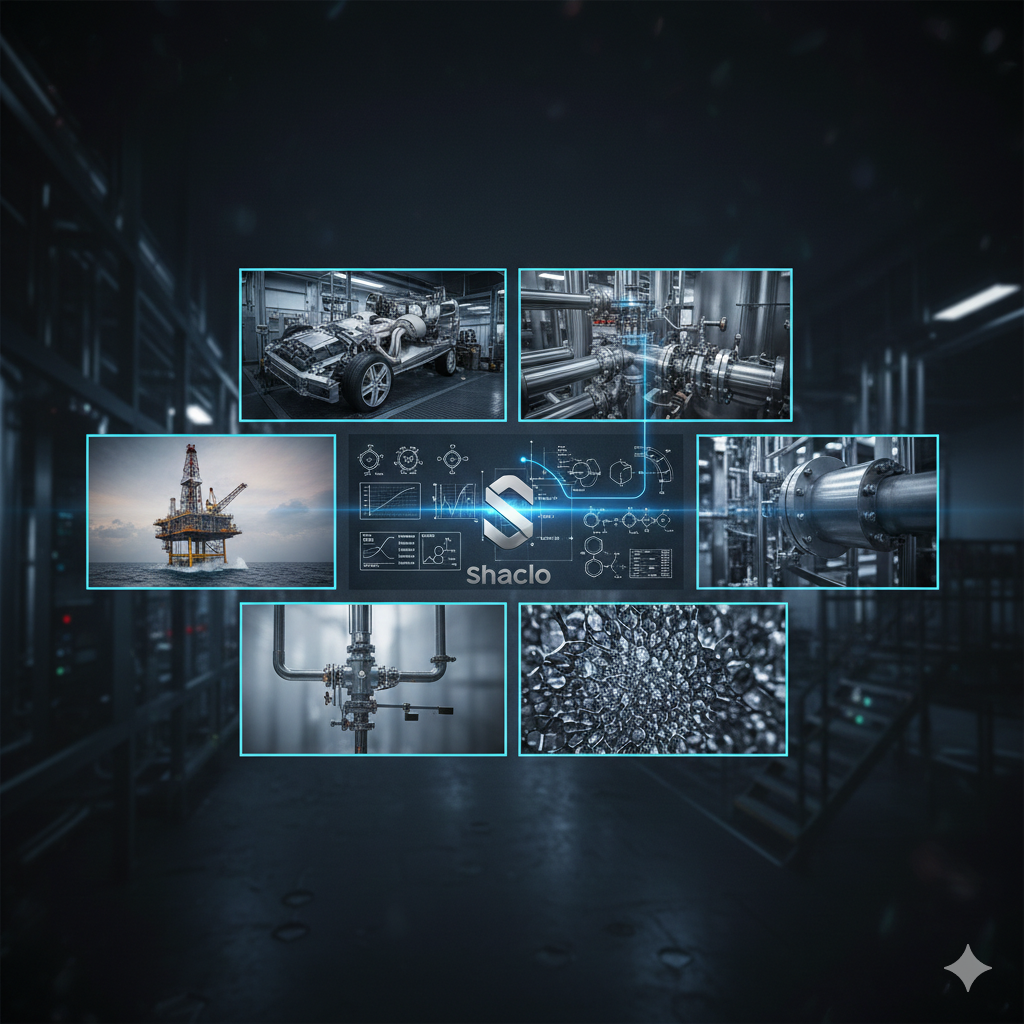
The oil and gas industry operates in some of the most hostile environments on Earth—offshore platforms battered by corrosive seawater and extreme weather, downhole equipment subjected to temperatures exceeding 200°C and pressures reaching 20,000 psi, subsea systems exposed to aggressive sour gas containing hydrogen sulfide, and petrochemical facilities processing corrosive hydrocarbons at elevated temperatures. In these extreme conditions, material failure doesn't merely mean equipment downtime—it can result in catastrophic explosions, environmental disasters, loss of life, and financial consequences measured in billions of dollars.
Among the specialized materials engineered to withstand these punishing conditions, Alloy 718 (UNS N07718) has emerged as the preferred choice for critical oil and gas applications where conventional stainless steels and even most superalloys fall short. This nickel-chromium-based superalloy combines exceptional high-temperature strength, outstanding corrosion resistance, remarkable fabricability, and proven reliability in the field—a unique property combination that has made it indispensable across upstream, midstream, and downstream oil and gas operations worldwide.
Understanding Alloy 718: Composition and Metallurgy
Chemical Composition: Engineered for Excellence
Alloy 718's exceptional performance stems from its carefully balanced chemical composition, where each element serves specific metallurgical purposes:
Nickel (50-55%): The base element providing the face-centered cubic (FCC) austenitic structure that maintains ductility and toughness even at cryogenic temperatures while resisting embrittlement at elevated temperatures.
Chromium (17-21%): Forms the protective chromium oxide passive film providing corrosion resistance in oxidizing environments, acids, and chloride-containing media. The chromium content in Alloy 718 significantly exceeds that of austenitic stainless steels, delivering superior corrosion resistance.
Iron (Balance, typically 17-19%): Reduces cost compared to pure nickel-based alloys while maintaining performance, providing solid solution strengthening and affecting phase stability.
Niobium/Columbium (4.75-5.5%) plus Tantalum: The key strengthening element in Alloy 718, forming the gamma double-prime (γ") precipitates responsible for the alloy's exceptional elevated-temperature strength. This precipitation-hardening mechanism allows Alloy 718 to maintain strength to approximately 650°C.
Molybdenum (2.8-3.3%): Enhances corrosion resistance particularly in reducing environments and acids, provides additional solid solution strengthening, and improves resistance to pitting and crevice corrosion in chloride environments.
Titanium (0.65-1.15%): Forms gamma prime (γ') precipitates contributing to strengthening, works synergistically with niobium in the precipitation hardening system, and improves weldability.
Aluminum (0.2-0.8%): Contributes to precipitation strengthening through gamma prime formation and enhances oxidation resistance at elevated temperatures.
Carbon (0.08% max): Controlled at low levels to prevent carbide precipitation that could reduce corrosion resistance and ductility, unlike older nickel alloys with higher carbon contents.
This composition isn't arbitrary but represents decades of metallurgical optimization balancing multiple performance requirements—strength, corrosion resistance, fabricability, weldability, and cost—into a single alloy suitable for diverse oil and gas applications.
Microstructure and Strengthening Mechanisms
Alloy 718's exceptional properties derive from its sophisticated microstructure featuring multiple strengthening mechanisms working synergistically:
Precipitation Hardening: After solution treatment and aging heat treatment, Alloy 718 develops fine precipitates of gamma double-prime (Ni₃Nb) and gamma prime (Ni₃(Al,Ti)) phases distributed throughout the austenitic matrix. These precipitates impede dislocation motion—the atomic-scale mechanism of plastic deformation—dramatically increasing strength while maintaining adequate ductility. The size, distribution, and volume fraction of these precipitates are controlled through precise heat treatment, allowing properties to be tailored to specific applications.
Solid Solution Strengthening: Elements like chromium, molybdenum, and iron dissolved in the nickel matrix increase strength by creating lattice distortions that impede dislocation motion even at elevated temperatures.
Grain Structure Control: Proper thermomechanical processing creates optimal grain structures balancing strength (favored by fine grains) and creep resistance (sometimes favored by larger grains or controlled grain boundaries).
This multi-mechanism strengthening approach explains why Alloy 718 maintains strength to temperatures far exceeding where austenitic stainless steels lose structural capability, making it essential for high-temperature oil and gas applications.
Why Oil and Gas Demands Alloy 718: Critical Performance Advantages
1. Exceptional High-Temperature Strength
The most compelling reason oil and gas operators specify Alloy 718 is its ability to maintain structural integrity at temperatures where conventional materials fail.
Temperature Capability: Alloy 718 maintains useful strength to approximately 650°C (1200°F), far exceeding austenitic stainless steels like 316L which lose significant strength above 450-500°C. This temperature capability proves essential in applications including exhaust systems on offshore platforms and turbines, petrochemical reactor vessels and heat exchangers, downhole equipment in high-temperature wells, and thermal oxidizers and flare systems.
Creep and Stress-Rupture Resistance: At elevated temperatures under sustained loading, materials gradually deform through creep—time-dependent plastic deformation that eventually leads to failure. Alloy 718's precipitation-strengthened structure provides excellent creep resistance, maintaining dimensional stability and structural integrity under sustained high-temperature stress. This creep resistance is critical for components that must maintain precise dimensions and structural integrity throughout years or decades of continuous high-temperature service.
Thermal Fatigue Resistance: Equipment experiencing repeated thermal cycling—heating and cooling causing expansion and contraction—eventually fails through thermal fatigue. Alloy 718's combination of strength, ductility, and thermal expansion characteristics provides excellent resistance to thermal fatigue cracking, extending service life in applications with frequent temperature variations.
2. Outstanding Corrosion Resistance in Aggressive Environments
Oil and gas environments challenge materials with multiple simultaneous corrosion mechanisms. Alloy 718's comprehensive corrosion resistance addresses these threats effectively.
Sour Gas Resistance: Perhaps the most critical requirement in many oil and gas applications is resistance to sour gas—hydrocarbon streams containing hydrogen sulfide (H₂S). Sour gas causes multiple failure modes in susceptible materials:
- Sulfide Stress Cracking (SSC): Hydrogen produced by corrosion reactions embrittles high-strength steels, causing sudden brittle fracture under tensile stress. Alloy 718's nickel-based structure and properly controlled strength levels provide immunity to SSC when processed and heat-treated correctly.
- Hydrogen-Induced Cracking (HIC): Hydrogen atoms diffusing into materials can accumulate at inclusions or microstructural features, creating internal pressure that cracks the material. Alloy 718's clean chemistry and homogeneous structure minimize HIC susceptibility.
- Stress Corrosion Cracking (SCC) in H₂S: Some materials crack under the combined effects of tensile stress and H₂S exposure. Alloy 718 resists this failure mode in typical oil and gas environments.
These sour service resistance characteristics make Alloy 718 compliant with NACE MR0175/ISO 15156—the industry standard governing materials for sour oil and gas production—a critical requirement for many applications.
Chloride Corrosion Resistance: Offshore and subsea applications expose materials to seawater containing 3.5% chlorides plus other salts. Produced water from reservoirs often contains even higher chloride concentrations. Alloy 718's high chromium, molybdenum, and nickel contents provide excellent resistance to:
- Pitting Corrosion: Localized attack initiating at surface imperfections, potentially perforating walls rapidly.
- Crevice Corrosion: Aggressive attack in shielded areas like gasket surfaces or threaded connections where stagnant conditions develop.
- Chloride Stress Corrosion Cracking: Catastrophic cracking affecting austenitic stainless steels in hot chloride environments—Alloy 718's nickel-based structure provides much better resistance.
Carbon Dioxide (CO₂) Resistance: Many oil and gas streams contain carbon dioxide that dissolves in water forming carbonic acid. Sweet corrosion (CO₂-driven attack in the absence of H₂S) rapidly destroys carbon steel. Alloy 718's corrosion resistance enables reliable service in high-CO₂ environments where carbon steel would fail within months.
Oxidation Resistance: At elevated temperatures, many materials oxidize rapidly, forming oxide scales that spall off, progressively thinning components until failure. Alloy 718's chromium and aluminum contents provide protective oxide films that remain adherent and protective, enabling long-term high-temperature service.
3. Exceptional Strength-to-Weight Ratio
Weight matters critically in oil and gas applications, particularly offshore and subsea where every kilogram affects installation costs, structural requirements, and operational logistics.
Enabling Lighter Structures: Alloy 718's yield strength (typically 1000-1200 MPa in aged condition) exceeds carbon steel by 3-4 times and austenitic stainless steels by 4-5 times. This strength advantage enables dramatically reduced wall thicknesses for pressure-containing components while maintaining equivalent pressure ratings.
Offshore Weight Savings: For offshore platforms where installation costs relate directly to total weight, using Alloy 718 for high-pressure, high-temperature equipment can reduce component weight by 50-70% compared to carbon steel equivalents. These weight savings translate to millions in reduced installation costs, smaller cranes required for installation, improved platform stability, and enhanced payload capacity for production equipment.
Subsea Applications: Subsea equipment—Christmas trees, manifolds, flowlines—benefits enormously from Alloy 718's high strength. Lighter subsea components reduce installation vessel requirements, enable installation in deeper waters, reduce foundation requirements on the seabed, and simplify recovery for maintenance or decommissioning.
4. Excellent Fabricability and Weldability
Despite its high performance, Alloy 718 maintains fabricability that many other superalloys lack—a critical advantage for manufacturing complex oil and gas equipment.
Machining Characteristics: While more difficult to machine than carbon steel or stainless steel, Alloy 718 is significantly more machinable than many other nickel-based superalloys. With appropriate tooling (carbide or ceramic), cutting parameters, and techniques, Alloy 718 can be machined to produce complex geometries required for valves, pumps, and specialized oilfield equipment.
Weldability: Alloy 718 exhibits excellent weldability compared to many high-performance alloys, with resistance to hot cracking and other weld defects common in difficult-to-weld materials. Various welding processes succeed with Alloy 718 including gas tungsten arc welding (GTAW/TIG), gas metal arc welding (GMAW/MIG), shielded metal arc welding (SMAW), and electron beam or laser welding for specialized applications.
Proper welding requires controlled procedures including appropriate filler metals (typically matching composition), controlled heat input preventing excessive heat-affected zone grain growth, post-weld solution treatment and aging to restore properties, and inert gas shielding preventing contamination. When properly welded, joints achieve strength approaching base metal and maintain corrosion resistance.
Cold and Hot Forming: Alloy 718 can be formed in both annealed and aged conditions, though annealed material offers better formability. Hot forming at controlled temperatures enables production of complex shapes, while cold forming is feasible for moderate deformations.
This fabricability means oil and gas equipment manufacturers can produce complex components from Alloy 718 without the extreme difficulties associated with some other high-performance alloys, controlling manufacturing costs while achieving required properties.
Critical Oil and Gas Applications for Alloy 718
Upstream Production: Downhole and Wellhead Equipment
Downhole Tools and Equipment: Production tubing hangers, downhole safety valves, subsurface safety valves in extreme conditions, completion equipment for HPHT (high-pressure/high-temperature) wells, and production packers all utilize Alloy 718 when well conditions exceed conventional material capabilities.
In ultra-deep wells or high-temperature reservoirs where bottom-hole temperatures exceed 175-200°C, Alloy 718's strength retention prevents collapse or failure of critical safety equipment. Its corrosion resistance ensures reliable operation despite aggressive formation fluids containing H₂S, CO₂, and chlorides.
Christmas Trees and Wellhead Components: Subsea and surface Christmas trees—the valve assemblies controlling well flow—use Alloy 718 for critical pressure-retaining components including valve bodies and bonnets in high-pressure wells, gate and seat materials requiring erosion resistance, actuator components experiencing high cyclic loads, and fasteners maintaining integrity under extreme pressures and temperatures.
Subsea Production Systems
Subsea Manifolds and Templates: These systems collect production from multiple wells, requiring materials withstanding seawater exposure externally and aggressive production fluids internally. Alloy 718 serves in piping and tubing exposed to both environments, valve components in critical flow control positions, connectors and fasteners under high stress, and instrumentation fittings where reliability is paramount.
Flexible Pipe and Umbilical Components: Flexible pipe connecting subsea wells to platforms, and umbilicals providing hydraulic, electrical, and chemical injection functions, incorporate Alloy 718 in pressure armor layers providing structural integrity, end fittings connecting flexible systems to rigid structures, and quick connectors enabling rapid subsea connections.
Offshore Platform Equipment
Turbines and Power Generation: Gas turbines powering offshore platforms operate at extreme temperatures. Alloy 718 finds use in turbine discs and rotors experiencing high centrifugal loads, turbine blades and vanes in hot sections, exhaust system components handling high-temperature gases, and fasteners maintaining clamping loads at elevated temperatures.
High-Pressure Compressors: Natural gas compression for transportation or reinjection requires compressors operating at high pressures and temperatures. Alloy 718 components include impellers handling high pressures and temperatures, valve seats resisting erosion from high-velocity gas, shaft components under high stress and fatigue loads, and pressure vessel components containing high-pressure gas.
Petrochemical and Refining Applications
Reactor Vessels and Heat Exchangers: Petrochemical processes convert hydrocarbons into chemicals, plastics, and fuels using reactors operating at elevated temperatures with corrosive feeds. Alloy 718 serves in reactor internal components exposed to highest temperatures, heat exchanger tubing in severely corrosive services, catalyst support structures requiring high-temperature strength, and pressure boundary components in critical reactors.
Hydroprocessing Equipment: Hydrotreating and hydrocracking units remove sulfur and nitrogen while breaking down heavy hydrocarbons. These processes occur at high temperatures (300-450°C) and pressures (70-200 bar) with hydrogen-rich environments. Alloy 718 provides reactor internals resisting hydrogen attack and sulfidation, high-pressure piping and fittings, separator components, and valve trim for high-pressure letdown service.
Material Specifications and Quality Requirements
Industry Standards Governing Alloy 718
Oil and gas applications typically specify Alloy 718 to rigorous industry standards:
ASTM Specifications:
- ASTM B637: Precipitation-hardening nickel alloy bars, forgings, and forging stock
- ASTM B670: Precipitation-hardening nickel alloy plate, sheet, and strip
- ASTM B983: Precipitation-hardening and cold worked nickel alloy bars
- ASTM B637: Used for most oil and gas applications
ASME Specifications:
- ASME SB-637: ASTM B637 under ASME Boiler and Pressure Vessel Code
- ASME SB-670: Plate and sheet materials
API Specifications:
- API 6A: Wellhead and Christmas tree equipment
- API 17D: Subsea production control systems
NACE Requirements:
- NACE MR0175/ISO 15156: Petroleum and natural gas industries—materials for use in H₂S-containing environments in oil and gas production
Meeting these specifications requires rigorous manufacturing quality control, comprehensive testing protocols, complete material traceability, and documentation supporting regulatory compliance and field performance validation.
Heat Treatment Requirements
Achieving Alloy 718's full property potential requires precise heat treatment:
Solution Treatment: Heating to 925-980°C dissolves precipitates, homogenizes the structure, and sets grain size, followed by rapid cooling (typically water quenching) to retain elements in solid solution.
Aging Treatment: Controlled heating (typically 718°C for 8 hours, furnace cool to 621°C, hold 8 hours, then air cool) precipitates the strengthening gamma double-prime and gamma prime phases in optimal size and distribution for maximum strength.
Stress Relief (when required): For welded structures or components with high residual stresses, intermediate stress relief treatments may be employed.
Improper heat treatment can result in insufficient strength from inadequate precipitation, brittle structures from excessive grain growth, corrosion susceptibility from carbide precipitation, or dimensional instability from residual stresses.
Alternatives and Why Alloy 718 Prevails
Compared to Austenitic Stainless Steels (316L, 317L)
Advantages of Alloy 718:
- 3-4x higher strength enabling thinner walls
- Temperature capability to 650°C vs. ~450°C for stainless steels
- Superior sour service resistance
- Better chloride stress corrosion cracking resistance
When Stainless Steel Suffices: Applications below 300°C with moderate pressures and non-sour environments where Alloy 718's cost premium isn't justified.
Compared to Duplex/Super Duplex Stainless Steels
Advantages of Alloy 718:
- Higher temperature capability (duplex limited to ~300°C)
- Superior strength at elevated temperatures
- Better resistance in extreme sour service
When Duplex Excels: Ambient to moderate temperature (<200°C) applications where duplex's combination of strength and corrosion resistance suffices at lower cost than Alloy 718.
Compared to Other Nickel-Based Alloys
Versus Alloy 625: Alloy 625 offers better corrosion resistance in some environments but lacks Alloy 718's precipitation-hardening capability and higher strength. For structural components under high stress, Alloy 718 prevails.
Versus Alloy C-276: C-276 provides superior corrosion resistance in highly aggressive chemicals but with lower strength. For corrosion-dominant applications without high stress, C-276 might be preferred, but for combinations of strength and corrosion, Alloy 718 typically wins.
Cost Considerations: Alloy 718 typically costs less than many other nickel-based superalloys while delivering excellent property combinations for oil and gas applications.
Procurement Considerations: Ensuring Quality
When specifying Alloy 718 for critical oil and gas applications, procurement must ensure:
Supplier Qualification: Source from suppliers with proven nickel alloy expertise, quality management systems certified to ISO 9001 and industry-specific standards, experience supplying oil and gas industry, and comprehensive testing capabilities.
Material Certifications: Require mill test reports (MTRs) documenting chemical composition and mechanical properties, heat treatment records confirming proper thermal processing, NACE MR0175 compliance certifications when required, positive material identification (PMI) testing, and complete traceability from melt to finished product.
Testing and Inspection: Depending on application criticality, specify mechanical testing to verify properties, non-destructive testing (ultrasonic, radiographic) detecting internal defects, corrosion testing simulating service environments, and third-party inspection for critical applications.
Documentation: Comprehensive documentation supports quality assurance, regulatory compliance, field performance tracking, and root cause analysis if issues occur.
Conclusion: The Clear Choice for Extreme Service
Alloy 718's dominance in harsh oil and gas environments stems not from marketing but from decades of proven field performance in the industry's most demanding applications. Its unique combination of high-temperature strength maintaining structural integrity where other materials fail, comprehensive corrosion resistance addressing sour service, chlorides, CO₂, and elevated temperatures, exceptional strength-to-weight ratio enabling optimized designs, and excellent fabricability supporting complex component manufacturing creates a property profile unmatched by alternative materials for extreme oil and gas service.
From deepwater subsea systems to ultra-high-pressure wellheads, from high-temperature petrochemical reactors to offshore platform turbines, Alloy 718 enables the oil and gas industry to operate safely and reliably in environments that would destroy conventional materials. As the industry continues pushing into deeper waters, higher temperatures, more corrosive reservoirs, and more demanding processing conditions, Alloy 718's importance will only grow.
For engineers specifying materials for critical oil and gas applications, Alloy 718 represents not just another material option but the proven solution when failure is not an option and performance in extreme environments is the only acceptable outcome.
Need Alloy 718 for your oil and gas application? Contact experienced suppliers with proven nickel alloy expertise, comprehensive quality systems, and commitment to supporting critical applications where material performance determines success or failure. In the harsh world of oil and gas, Alloy 718 delivers the performance you can depend on.
