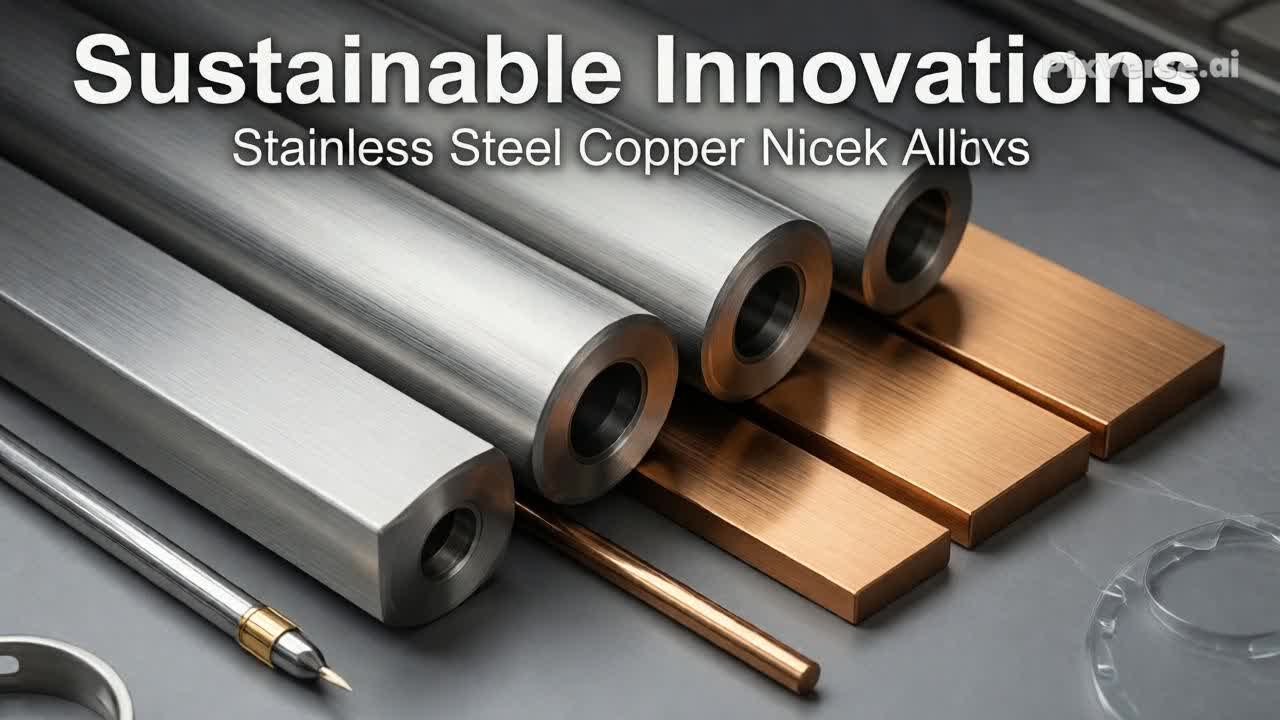
As global industries face mounting pressure to reduce their environmental footprint, the metallurgical sector is responding with groundbreaking sustainable innovations in stainless steel and copper nickel alloys. These advanced materials are not only meeting the demanding performance requirements of modern applications but are also leading the charge toward a more sustainable industrial future. From circular economy principles to energy-efficient production methods, the transformation of specialty metals is reshaping how we build, manufacture, and maintain critical infrastructure.
The Sustainability Imperative in Metallurgy
The metals industry accounts for a significant portion of global carbon emissions and energy consumption. However, stainless steel and copper nickel alloys offer unique sustainability advantages that make them essential materials for the green transition:
Exceptional Longevity: These materials can last 50 to 100 years or more in many applications, dramatically reducing the need for replacement and associated environmental impacts.
Complete Recyclability: Both stainless steel and copper nickel alloys are infinitely recyclable without degradation of properties, making them cornerstone materials in the circular economy.
Corrosion Resistance: Superior resistance to degradation means less material waste, fewer maintenance interventions, and reduced lifecycle costs.
Energy Efficiency: Applications like heat exchangers and condensers made from these alloys contribute to overall energy efficiency in industrial processes.
Sustainable Production Innovations
Modern manufacturers are revolutionizing how stainless steel and copper nickel alloys are produced, with sustainability at the core of their operations:
Green Manufacturing Processes
Electric Arc Furnace Technology: The shift from traditional blast furnaces to electric arc furnaces (EAF) has dramatically reduced carbon emissions in stainless steel production. EAF technology can utilize up to 90% recycled content, slashing energy consumption by approximately 75% compared to primary production.
Hydrogen-Based Reduction: Pioneering companies are exploring hydrogen as a replacement for carbon in the reduction process, potentially eliminating CO2 emissions from steel production entirely.
Renewable Energy Integration: Leading manufacturers are powering their facilities with renewable energy sources, including solar, wind, and hydroelectric power, further reducing the carbon footprint of alloy production.
Water Conservation: Closed-loop water systems and advanced filtration technologies minimize water consumption and eliminate industrial discharge into waterways.
Shalco: Championing Sustainable Metallurgy
Shalco has emerged as a leader in sustainable specialty metals manufacturing, demonstrating that environmental responsibility and industrial excellence can go hand in hand. As a premier manufacturer and supplier of stainless steel and copper nickel alloy products, Shalco has integrated sustainability into every aspect of their operations.
Shalco's Sustainable Practices
Responsible Sourcing: Shalco prioritizes sourcing raw materials from suppliers who adhere to environmental and social governance standards, ensuring that sustainability extends throughout the supply chain.
High Recycled Content: By utilizing significant percentages of recycled stainless steel and copper nickel in their production processes, Shalco reduces the demand for virgin materials and minimizes mining impacts.
Energy-Efficient Manufacturing: State-of-the-art facilities employ the latest energy-efficient technologies, from induction heating to precision machining that minimizes material waste.
Zero-Waste Initiatives: Shalco's commitment to zero-waste manufacturing means that scrap materials are systematically collected, sorted, and reintroduced into the production cycle.
Product Durability Focus: Every pipe, tube, fitting, and flange produced by Shalco is engineered for maximum longevity, ensuring that end-users benefit from extended service life and reduced replacement frequency.
The Circular Economy of Specialty Alloys
One of the most compelling sustainability stories in metallurgy is the circular economy model perfectly embodied by stainless steel and copper nickel alloys:
Infinite Recyclability
Unlike many materials that degrade with recycling, stainless steel and copper nickel alloys can be melted down and reformed indefinitely without losing their essential properties. This means:
- A stainless steel pipe installed in 1950 can be recycled today and transformed into components that will serve for another 50+ years
- Approximately 85% of stainless steel is recycled at end-of-life
- Copper nickel alloys maintain their corrosion resistance even after multiple recycling cycles
Economic and Environmental Benefits
The economics of recycling these alloys are compelling:
Reduced Mining Impact: Every ton of recycled stainless steel or copper nickel saves thousands of tons of ore, reducing habitat destruction and processing waste.
Energy Savings: Recycling stainless steel uses 70% less energy than producing it from virgin materials.
Job Creation: The recycling and reprocessing industry creates skilled jobs while supporting environmental goals.
Resource Security: Recycling reduces dependence on imported raw materials, enhancing national resource security.
Sustainable Applications Across Industries
The unique properties of stainless steel and copper nickel alloys make them indispensable in applications that support global sustainability goals:
Renewable Energy Infrastructure
Offshore Wind Farms: Copper nickel alloys resist seawater corrosion in turbine cooling systems and subsea cables, ensuring reliable performance over 25+ year lifespans.
Solar Thermal Plants: Stainless steel heat exchangers and piping systems withstand high temperatures while maintaining efficiency.
Hydrogen Economy: Specialized stainless steel grades are essential for hydrogen production, storage, and distribution infrastructure.
Tidal and Wave Energy: Marine-grade alloys enable emerging ocean energy technologies to withstand harsh saltwater environments.
Water and Wastewater Management
Desalination Plants: Copper nickel alloys excel in desalination applications, providing reliable freshwater production with minimal maintenance.
Water Distribution: Stainless steel piping ensures clean water delivery without leaching or contamination, lasting 50-100 years.
Wastewater Treatment: Corrosion-resistant materials handle aggressive chemicals while supporting decades of reliable operation.
Sustainable Transportation
Marine Vessels: Copper nickel hulls and heat exchangers reduce biofouling, eliminating the need for toxic antifouling paints and improving fuel efficiency.
Electric Vehicles: Stainless steel components in battery systems and hydrogen fuel cells support the electrification transition.
Public Transit: Durable stainless steel in rail systems and stations requires minimal maintenance over multi-decade lifespans.
Innovation in Alloy Composition
Researchers and manufacturers are developing new alloy formulations that enhance sustainability:
Lean Alloys: New compositions achieve similar performance with reduced amounts of critical elements like nickel and molybdenum, conserving scarce resources.
Bio-Inspired Alloys: Surface treatments mimicking natural anti-fouling mechanisms reduce the need for chemical treatments in marine applications.
High-Strength Variants: Advanced processing creates stronger alloys, allowing designers to use less material while maintaining structural integrity.
Life Cycle Assessment: The Complete Picture
Modern sustainability requires looking beyond production to consider entire life cycles:
Extended Service Life: A 50-year service life versus a 10-year alternative means 80% less embodied energy over time.
Maintenance Reduction: Corrosion resistance eliminates painting, coating, and frequent repairs, saving resources and labor.
End-of-Life Value: Unlike materials that become waste, stainless steel and copper nickel alloys retain significant scrap value, incentivizing recovery and recycling.
Carbon Payback: The initial carbon investment in producing these alloys is recovered through decades of low-maintenance service and eventual recycling.
Digital Technologies Enhancing Sustainability
Advanced digital tools are optimizing sustainability across the supply chain:
AI-Powered Design: Machine learning algorithms optimize alloy selection for specific applications, minimizing material use while ensuring performance.
Predictive Maintenance: IoT sensors monitor material condition, enabling proactive maintenance that extends service life.
Digital Twins: Virtual modeling of material performance reduces the need for physical testing and prototyping.
Supply Chain Transparency: Blockchain and tracking systems ensure sustainable sourcing and facilitate recycling at end-of-life.
Certifications and Standards Driving Sustainability
Companies like Shalco recognize that third-party verification is essential for credible sustainability claims:
Environmental Management Systems: ISO 14001 certification demonstrates systematic environmental management.
Responsible Sourcing: Adherence to standards ensuring ethical mining and processing practices.
Product Environmental Declarations: EPDs provide transparent lifecycle environmental impact data.
Green Building Certifications: Products that contribute to LEED and other sustainable building standards.
The Future of Sustainable Metallurgy
The trajectory of sustainable innovation in stainless steel and copper nickel alloys points toward:
Carbon-Neutral Production: Increasing adoption of hydrogen reduction and renewable energy will enable zero-carbon manufacturing.
Enhanced Recycling Technologies: Advanced sorting and processing will increase recycling rates even further.
Bio-Based Alloying Elements: Research into sustainable sources for alloying elements may reduce mining dependence.
Additive Manufacturing: 3D printing with these alloys will minimize waste while enabling optimized designs.
Making Sustainable Choices
For engineers, specifiers, and procurement professionals, choosing sustainable materials means:
- Partnering with suppliers like Shalco who demonstrate commitment to environmental responsibility
- Considering lifecycle costs and environmental impacts, not just initial price
- Specifying materials with proven longevity and recyclability
- Supporting the circular economy by choosing products with recycled content
Conclusion: Building Tomorrow's Infrastructure Today
Sustainable innovations in stainless steel and copper nickel alloys represent more than incremental improvements—they embody a fundamental transformation in how we produce and utilize materials. Companies like Shalco are proving that manufacturing excellence and environmental stewardship are not competing priorities but complementary goals.
As we build infrastructure for renewable energy, clean water, sustainable transportation, and resilient cities, the role of these advanced alloys becomes ever more critical. Their combination of durability, recyclability, and performance makes them indispensable materials for a sustainable future.
By choosing suppliers who prioritize sustainability, specifying materials with proven lifecycle benefits, and supporting circular economy principles, industry professionals can contribute to meaningful environmental progress while ensuring project success. The innovations in stainless steel and copper nickel alloys are not just transforming industries—they are helping build a more sustainable world for future generations.