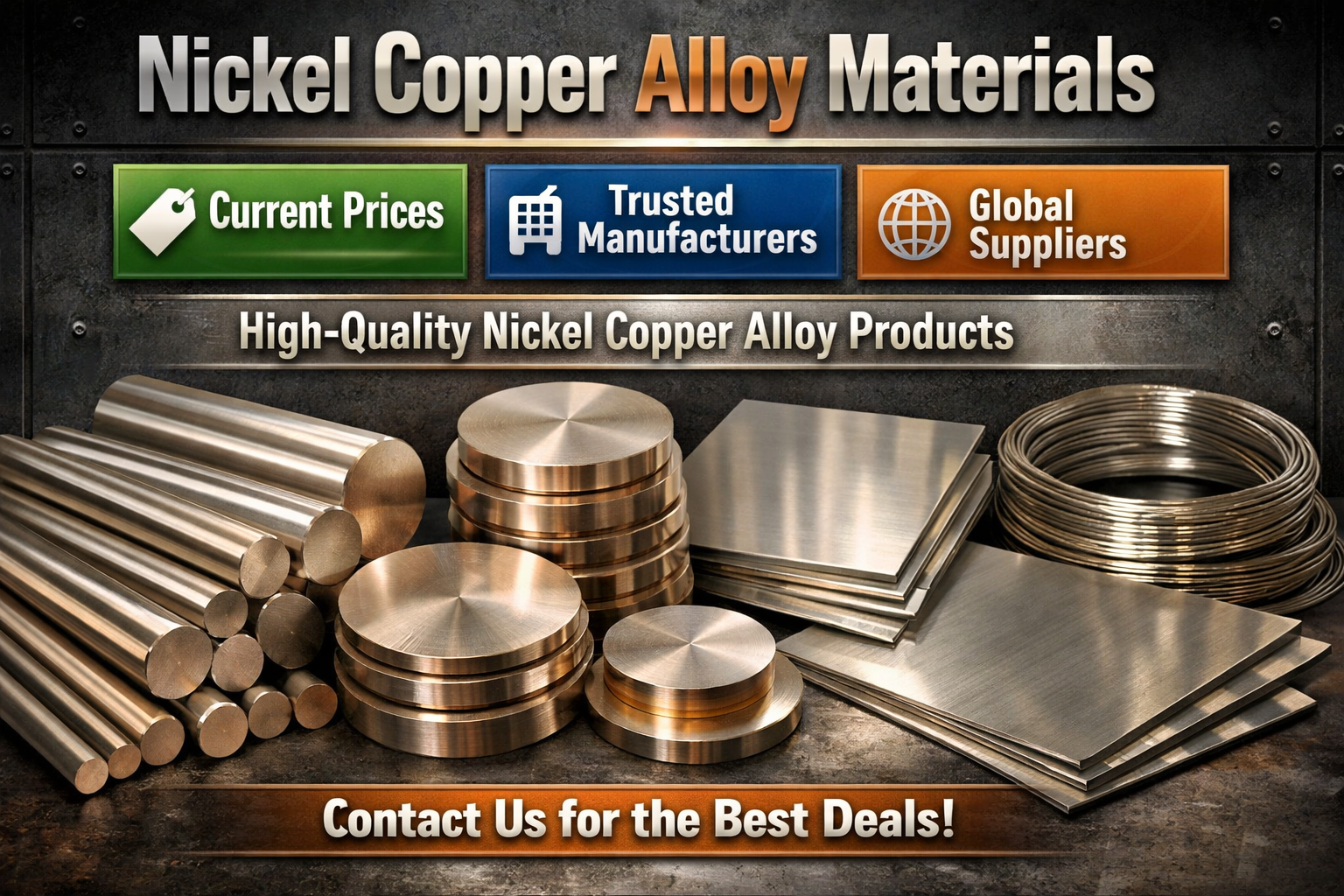
Nickel copper alloys represent a specialized class of engineering materials that combine the corrosion resistance of nickel with the thermal and electrical conductivity of copper, creating alloys with unique properties that make them indispensable across multiple industries. The most prominent member of this family, Monel, has become synonymous with reliability in marine environments, chemical processing, and oil and gas applications where ordinary materials fail rapidly. At Shalco, we've established ourselves as a leading supplier of nickel copper alloys, providing comprehensive solutions that include material sourcing, technical consultation, competitive pricing, and reliable delivery to customers worldwide. Understanding these remarkable alloys—their composition, properties, applications, and market dynamics—is essential for engineers, procurement professionals, and manufacturers seeking optimal materials for demanding applications.
Understanding Nickel Copper Alloy Composition and Grades
Nickel copper alloys are primarily based on the nickel-copper binary system, with the most important commercial alloys containing approximately 63-70% nickel and 28-34% copper, along with small amounts of iron, manganese, and other elements that fine-tune specific properties. This composition creates a solid solution structure that delivers exceptional strength and corrosion resistance.
Monel 400 (UNS N04400)
Monel 400 stands as the flagship nickel copper alloy, containing approximately 63% nickel and 28-34% copper with small amounts of iron and manganese. This composition provides outstanding resistance to seawater, hydrofluoric acid, sulfuric acid, and alkaline solutions across a wide range of temperatures and concentrations. The alloy maintains excellent mechanical properties from sub-zero temperatures to approximately 480°C, making it versatile for diverse applications.
Monel 400's resistance to chloride-induced stress corrosion cracking far exceeds that of austenitic stainless steels, explaining its preference in marine and chemical processing applications where chlorides are prevalent. The material can be readily fabricated through conventional hot and cold working processes, machined with appropriate techniques, and welded using standard methods. Shalco maintains comprehensive inventories of Monel 400 in various product forms including plate, sheet, bar, wire, pipe, and tube, ensuring rapid availability for customer projects.
Monel K-500 (UNS N05500)
Monel K-500 represents an age-hardenable modification of Monel 400, with aluminum and titanium additions enabling precipitation hardening heat treatment. Through proper aging, K-500 achieves yield strengths approximately three times higher than annealed Monel 400 while retaining comparable corrosion resistance. This strength advantage makes K-500 particularly valuable in applications requiring high mechanical properties combined with corrosion resistance.
Typical applications include pump shafts and impellers operating in seawater, doctor blades and scrapers in paper manufacturing, springs and fasteners in marine environments, and oil and gas production equipment requiring both strength and corrosion resistance. The material's combination of properties justifies its premium pricing, and Shalco provides K-500 with complete mill test reports and certifications documenting mechanical properties achieved through proper heat treatment.
Monel R-405 (UNS N04405)
Monel R-405 is essentially Monel 400 with controlled sulfur addition (0.025-0.060%) that improves machinability through chip breaking, making it the preferred choice for components requiring extensive machining operations. Applications include valve stems and seats, pump components with intricate geometries, fasteners requiring precision threading, and any component where improved machinability reduces manufacturing costs sufficiently to justify the slight property compromises compared to standard Monel 400.
Other Nickel Copper Alloys
Beyond the Monel family, other nickel copper alloys serve specialized niches. Cupronickel alloys (copper-nickel alloys) contain 70-90% copper with 10-30% nickel and find extensive use in marine condenser tubes, heat exchangers, and desalination equipment. While technically copper alloys rather than nickel alloys, their properties bridge the gap between pure copper and nickel-rich alloys. Shalco supplies various cupronickel grades including 90/10 and 70/30 compositions for customers in marine and power generation industries.
Exceptional Properties Driving Application Selection
The unique property combination of nickel copper alloys explains their continued specification despite premium pricing compared to more common alloys.
Corrosion Resistance
Nickel copper alloys demonstrate exceptional resistance to multiple corrosive environments. In seawater, Monel exhibits virtually no corrosion under normal conditions, maintaining clean surfaces even after decades of exposure. This resistance extends to brackish water, brine, and other chloride solutions that rapidly attack stainless steels and other materials. Hydrofluoric acid resistance makes Monel nearly unique among engineering alloys, with Monel 400 handling HF concentrations up to approximately 85% at moderate temperatures. Sulfuric acid resistance varies with concentration and temperature, but Monel performs well in reducing sulfuric acid conditions. Alkaline solutions including caustic soda (sodium hydroxide) at all concentrations and temperatures contact Monel with minimal attack. Atmospheric corrosion resistance exceeds that of carbon steel, stainless steel, and even titanium in marine atmospheres, explaining Monel's use in coastal architectural applications and offshore structures.
Mechanical Properties
Nickel copper alloys offer solid mechanical properties across wide temperature ranges. Monel 400 provides yield strength around 240-280 MPa in the annealed condition, with tensile strength typically 520-600 MPa. These properties increase significantly through cold working, with cold-drawn conditions achieving yield strengths exceeding 700 MPa. Monel K-500, after age hardening, reaches yield strengths around 760 MPa with tensile strengths exceeding 1100 MPa, approaching those of high-strength steel while maintaining excellent corrosion resistance.
Toughness remains excellent even at cryogenic temperatures, with Monel maintaining ductility down to liquid hydrogen temperatures (-253°C). This characteristic makes nickel copper alloys suitable for cryogenic service in LNG facilities and other ultra-low temperature applications. Fatigue resistance proves superior in corrosive environments compared to materials like stainless steel, as Monel's resistance to pitting and crevice corrosion prevents fatigue crack initiation at corrosion sites.
Thermal and Electrical Properties
While not matching pure copper's conductivity, nickel copper alloys maintain useful thermal and electrical conductivity. Monel 400's thermal conductivity of approximately 21.8 W/m·K allows adequate heat transfer in heat exchanger applications while providing corrosion resistance far exceeding copper. Thermal expansion coefficients around 13.9 × 10⁻⁶/°C closely match those of carbon steel, simplifying design of joints between Monel and steel components.
Fabrication Characteristics
Nickel copper alloys can be fabricated using conventional metalworking processes, though their higher strength and work hardening rates require appropriate techniques. Hot working is performed between 1095-1205°C, with Monel exhibiting good hot workability. Cold working produces substantial strengthening, with reduction in area increasing yield strength predictably. Intermediate annealing at 870-980°C restores ductility when severe cold working is required.
Machining Monel requires sharp tools, adequate cutting speeds, and generous coolant application due to the material's work hardening tendency. High-speed steel or carbide tools perform well with proper parameters. Monel R-405's improved machinability significantly reduces machining costs for complex components. Welding can be accomplished using GTAW, GMAW, and SMAW processes with appropriate Monel filler metals. Proper cleaning before welding and interpass temperature control ensure sound welds matching base metal properties.
Critical Applications Across Industries
Nickel copper alloys serve essential roles across diverse industries where their unique properties justify premium costs.
Marine and Offshore Applications
The marine industry represents perhaps the largest market for nickel copper alloys, where seawater corrosion resistance proves indispensable. Monel pump shafts and impellers operate for decades in seawater service without significant corrosion. Propeller shafts on naval vessels and commercial ships use Monel K-500 for its strength and seawater resistance combination. Heat exchanger tubes in seawater cooling systems specify Monel or cupronickel to prevent tube failures that plague carbon steel and even stainless steel alternatives. Offshore platform components including valve trim, fasteners, and instrumentation utilize Monel for reliable long-term performance. Submarine hull penetrations and valve components employ Monel for critical sealing applications. Shalco supplies marine-grade nickel copper alloys with certifications meeting naval and commercial marine specifications.
Chemical Processing Industry
Chemical plants rely on nickel copper alloys for handling aggressive chemicals. Hydrofluoric acid alkylation units in refineries use Monel extensively for vessels, piping, valves, and heat exchangers, as virtually no other economical material withstands HF exposure. Sulfuric acid chlorination processes specify Monel for its resistance to this particularly aggressive environment. Chlorine handling equipment including valves, pipes, and vessel linings use Monel where chlorine gas or solutions contact equipment. Caustic processing equipment handles sodium hydroxide solutions at high concentrations and temperatures using Monel components. Pharmaceutical manufacturing uses Monel in applications requiring both corrosion resistance and contamination-free processing.
Oil and Gas Production
Offshore oil and gas production creates extremely corrosive conditions combining seawater, hydrogen sulfide, carbon dioxide, and chlorides at elevated temperatures and pressures. Monel wellhead components, valves, and instrumentation withstand these conditions reliably. Subsurface safety valves use Monel K-500 for critical moving parts requiring both strength and corrosion resistance. Completion equipment including packers and hangers specify Monel for seawater-exposed components. Umbilical tubing carrying hydraulic fluids and chemicals uses Monel for long-term reliability in subsea service. Production tubing in particularly corrosive wells may specify Monel or nickel-based alloys for extended life. Shalco works closely with oil and gas customers to specify appropriate nickel copper alloy grades for specific well conditions.
Aerospace Applications
Aircraft and spacecraft use nickel copper alloys in specialized applications. Fuel system components benefit from Monel's corrosion resistance and strength. Exhaust systems on certain aircraft use Monel for its elevated temperature capability and corrosion resistance. Hydraulic system components specify Monel for reliability and corrosion resistance. Fasteners in corrosive environments use Monel K-500 for its strength and environmental resistance. Honeycomb structures sometimes employ Monel for specific applications requiring metallic honeycomb with corrosion resistance.
Power Generation
Power plants utilize nickel copper alloys in various systems. Feedwater heaters use cupronickel tubes for superior heat transfer combined with corrosion resistance. Condenser tubes in coastal power plants specify cupronickel to resist seawater corrosion. Steam turbine components occasionally use Monel for specific applications. Geothermal power plants employ Monel for handling corrosive geothermal fluids. Nuclear power plants use Monel in specific applications requiring corrosion resistance and compatibility with reactor coolants.
Other Industrial Applications
Mining operations use Monel in processing equipment handling corrosive ores and chemicals. Pulp and paper mills specify Monel for components contacting black liquor and other corrosive process streams. Food processing equipment uses Monel where stainless steel proves inadequate and contamination-free processing is essential. Architectural applications include Monel roofing, flashing, and decorative elements in coastal environments where extreme longevity justifies initial cost. Water treatment facilities employ Monel and cupronickel in desalination plants and systems handling aggressive water chemistries.
Current Market Prices and Cost Factors
Nickel copper alloy pricing reflects the volatile nature of base metal markets, particularly nickel and copper commodity prices, along with manufacturing complexity and global supply-demand dynamics.
Base Metal Price Impact
Nickel and copper commodity prices drive raw material costs for nickel copper alloys. Nickel, classified as a critical material, experiences significant price volatility based on global supply constraints, demand from stainless steel and battery industries, and geopolitical factors affecting major producing regions. Copper prices fluctuate with construction activity, electrical infrastructure investment, and industrial production levels. Producers typically calculate nickel copper alloy prices using base prices plus surcharges linked to current nickel and copper market prices, protecting manufacturers from commodity volatility while ensuring customers pay current market rates.
Current Pricing Ranges (2026 Market Conditions)
As of early 2026, Monel 400 material prices typically range from $35-55 per kilogram for standard product forms, varying with quantity, form, size, and market conditions. Monel K-500 commands premium pricing of approximately $45-65 per kilogram reflecting additional alloying elements and heat treatment requirements. Monel R-405 prices fall between standard Monel 400 and K-500, typically $40-58 per kilogram. Small quantity purchases and non-standard sizes command premiums above these ranges, while large volume contracts and standard sizes may achieve lower unit costs.
Fabricated components naturally cost significantly more than raw material, with machining, forming, welding, and finishing adding value proportional to complexity. Simple pipe or sheet cutting might add 20-40% to material costs, while complex machined components can cost several times raw material prices due to Monel's challenging machinability and work hardening characteristics.
Shalco maintains relationships with multiple mills and stockholders worldwide, enabling competitive pricing through volume purchasing, efficient logistics, and minimal intermediary markups. Our pricing remains transparent with clear documentation of base prices and applicable surcharges, ensuring customers understand cost structures and can plan projects accurately.
Cost Optimization Strategies
Despite premium pricing, several strategies help optimize nickel copper alloy costs. Proper grade selection ensures specifying Monel only where its properties are truly necessary, using lower-cost alternatives like stainless steel or cupronickel where adequate. Design optimization minimizes material usage through efficient geometries and appropriate wall thicknesses based on actual requirements rather than overly conservative assumptions. Volume consolidation combining orders from multiple projects achieves better pricing through larger quantities. Inventory planning for anticipated future needs allows purchasing during favorable market conditions. Alternative product forms such as plate vs. sheet or seamless vs. welded pipe, might offer cost advantages depending on requirements. Shalco's technical team assists customers in these optimization efforts, ensuring cost-effective solutions meeting performance requirements.
Trusted Manufacturers and Quality Sources
The specialized nature of nickel copper alloy production means relatively few manufacturers worldwide produce these materials to exacting standards required for critical applications.
Primary Manufacturers
Special Metals Corporation (now part of Precision Castparts Corp., a Berkley Hathaway company) represents perhaps the most recognized Monel producer, holding the Monel trademark and producing comprehensive ranges of nickel copper alloys to aerospace and industrial specifications. Their materials carry premium recognition for quality and consistency.
Huntington Alloys (part of Special Metals) produces nickel copper alloys for industrial markets with emphasis on chemical processing and marine applications. Their products meet ASME, ASTM, and industry-specific specifications.
VDM Metals (Germany) manufactures high-quality nickel copper alloys serving European markets with emphasis on chemical processing and industrial applications. Their materials comply with European standards and specifications.
Nippon Yakin (Japan) produces nickel alloys including Monel equivalents for Asian markets, with strong positions in chemical and industrial sectors.
Haynes International manufactures nickel-based alloys including some nickel copper compositions, particularly for high-performance applications.
Chinese manufacturers including Baosteel Special Steel and others have entered nickel copper alloy markets, offering competitive pricing though quality and consistency may vary compared to established Western producers.
Shalco's Supplier Network and Quality Assurance
At Shalco, we've cultivated relationships with premium manufacturers worldwide, ensuring access to high-quality nickel copper alloys with complete traceability and certifications. Our supplier qualification process evaluates manufacturing capabilities, quality systems, testing facilities, and track records before approving sources. We maintain preferred supplier relationships with primary manufacturers while also working with qualified secondary producers and stockholders to ensure competitive pricing and availability.
Every shipment Shalco delivers includes comprehensive mill test reports documenting chemical composition, mechanical properties, heat treatment history, and quality test results. Materials destined for critical applications can include additional testing such as positive material identification (PMI), ultrasonic examination, hydrostatic testing for pipe and tube, and specialized corrosion testing when specified. Our quality management system ensures proper material identification throughout our facilities, preventing mix-ups that could result in wrong materials reaching customers.
Traceability extends from original mill heat numbers through all processing and handling steps to final delivery, enabling complete material history documentation essential for aerospace, nuclear, and other regulated industries. Shalco's certifications and accreditations demonstrate our commitment to quality, providing customers confidence in materials meeting their exacting requirements.
Global Supply Chain and Availability
Nickel copper alloy supply chains reflect the specialized nature of these materials and relatively concentrated production capacity.
Regional Availability
North America maintains strong nickel copper alloy production and distribution infrastructure, with Special Metals facilities providing primary production supplemented by numerous service centers and distributors. Shalco's North American network ensures reliable supply to customers throughout the United States, Canada, and Mexico.
Europe accesses materials from VDM Metals, Special Metals European facilities, and numerous stockists serving diverse industries. Shalco's European connections ensure supply to customers across the continent.
Asia has seen growing local production, particularly in China, Japan, and South Korea, reducing dependence on Western imports. Shalco's Asian partnerships provide access to both local and imported materials meeting international specifications.
Middle East and Africa typically import nickel copper alloys from North American, European, or Asian sources, with growing distribution infrastructure in major hubs. Shalco ships to these regions regularly, managing logistics to ensure timely delivery.
South America generally imports nickel copper alloys, with Brazil maintaining some distribution infrastructure. Shalco serves South American customers through our global logistics network.
Lead Times and Inventory Strategies
Standard product forms from mill inventories typically ship within 2-6 weeks depending on manufacturer and location. Non-standard sizes, specifications, or conditions may require 12-20 weeks as materials are produced to order. Emergency requirements sometimes can be met from distributor stocks, though availability varies and premium pricing applies.
Shalco maintains strategic inventories of common Monel grades and sizes, enabling rapid shipment for customer emergencies and standard requirements. Our inventory management balances carrying costs against service level benefits, focusing on high-turnover items and sizes serving multiple customer applications. For customers with predictable ongoing needs, we offer consignment inventory programs where materials are stocked at customer facilities and paid for upon use, ensuring availability without customer carrying costs.
Processing and Value-Added Services
Beyond material supply, Shalco offers comprehensive processing and value-added services that transform raw materials into ready-to-use components.
Cutting and Machining
Plate and sheet cutting to customer specifications using plasma, waterjet, or saw cutting depending on thickness and precision requirements. Bar cutting and turning producing precisely sized blanks or finished rounds. Tube cutting and end preparation including beveling for welding. These services reduce customer manufacturing steps and eliminate minimum order quantities that might otherwise apply.
Forming and Fabrication
Monel's work hardening characteristics and strength require appropriate forming techniques and equipment. Shalco's fabrication partners possess expertise forming nickel copper alloys into complex shapes while managing work hardening and maintaining dimensional tolerances. Services include rolling, stamping, bending, and specialized forming operations.
Welding
Welding nickel copper alloys requires proper procedures, qualified welders, and appropriate filler metals. Shalco connects customers with qualified fabricators experienced in Monel welding or provides technical guidance for customers performing their own welding operations.
Testing and Inspection
Additional testing beyond standard mill tests includes non-destructive examination (radiography, ultrasonic, liquid penetrant, magnetic particle), mechanical testing on customer-supplied samples, corrosion testing simulating service environments, and dimensional inspection with certified documentation. These services verify materials meet customer specifications and provide additional assurance for critical applications.
Technical Support and Application Engineering
Shalco's value proposition extends beyond material supply to comprehensive technical support helping customers optimize material selection and application.
Our metallurgical engineers assist with grade selection based on service environment analysis, corrosion resistance evaluation, mechanical property requirements, fabrication considerations, and cost optimization. We review customer specifications, recommend appropriate materials, and explain technical reasoning behind recommendations.
Application engineering support addresses design questions, fabrication challenges, and processing parameters. We provide welding procedure guidelines, machining parameter recommendations, forming technique suggestions, and corrosion prevention strategies. This support helps customers successfully implement nickel copper alloys in demanding applications.
Failure analysis services investigate material failures, determine root causes, and recommend corrective actions. Our experience with nickel copper alloys enables accurate diagnosis of whether failures result from material deficiencies, design inadequacies, environmental factors more aggressive than anticipated, or other causes.
Conclusion and Shalco's Commitment
Nickel copper alloys occupy critical niches across industries where their unique combination of seawater corrosion resistance, hydrofluoric acid resistance, mechanical properties, and fabricability justify premium costs compared to more common engineering materials. Understanding these materials—their composition, properties, applications, pricing, and supply sources—enables informed decisions balancing performance requirements against economic realities.
At Shalco, we've built our reputation on delivering high-quality nickel copper alloys with competitive pricing, reliable availability, comprehensive technical support, and customer service excellence. Our relationships with premium manufacturers worldwide ensure access to materials meeting the most exacting specifications. Our technical expertise helps customers select optimal grades and implement them successfully. Our logistics capabilities deliver materials on schedule to customers globally. Our commitment to quality ensures materials arrive with complete documentation and traceability.
Whether you're designing new equipment requiring nickel copper alloys, maintaining existing systems, or exploring whether these materials offer solutions to corrosion challenges, Shalco stands ready to provide materials, expertise, and support your projects demand. Contact us to discuss your nickel copper alloy requirements and discover how our capabilities can contribute to your success in applications where ordinary materials simply won't suffice.