
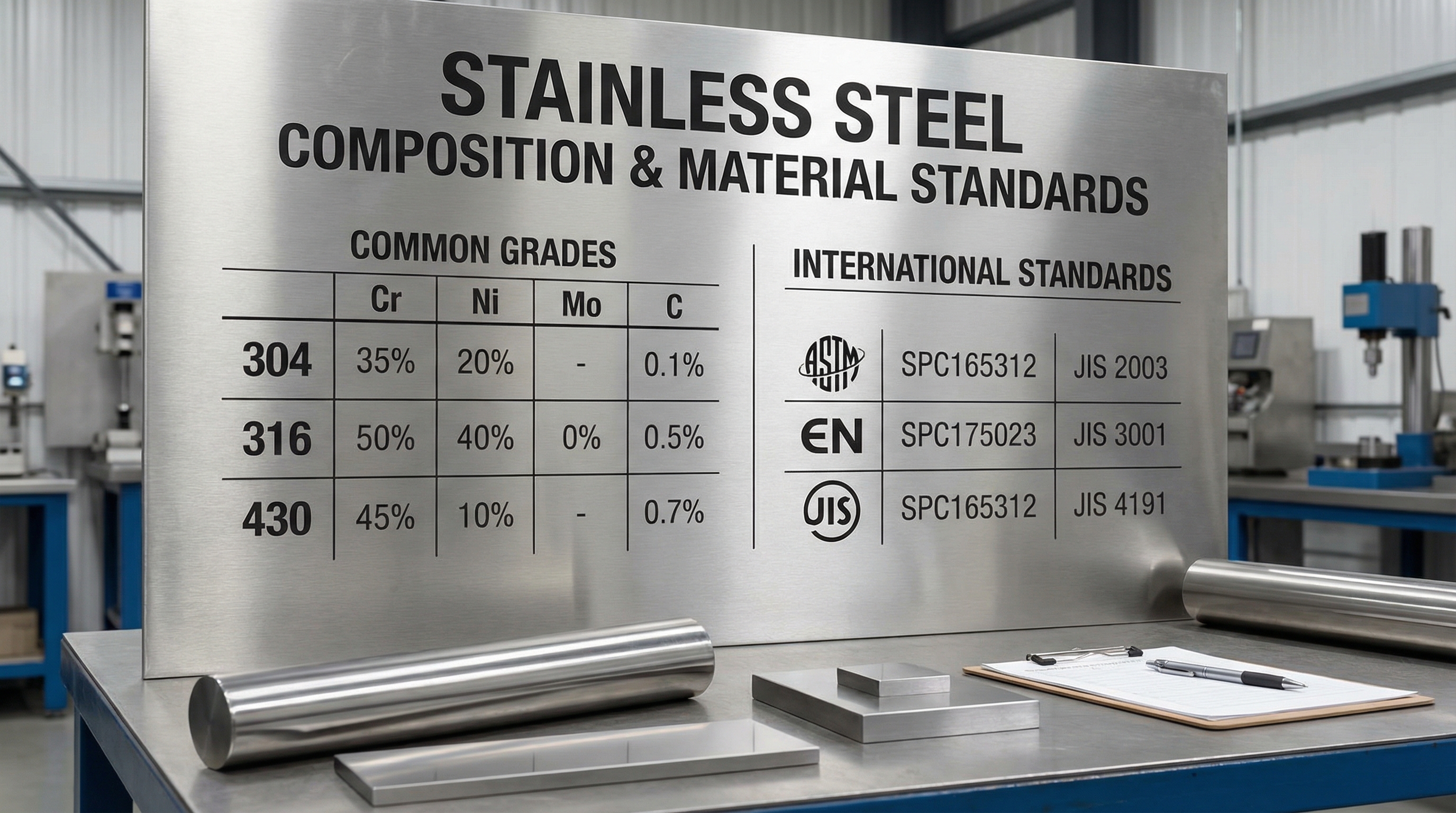
Stainless steel represents one of the most versatile and widely used materials in modern manufacturing and construction. Its unique combination of corrosion resistance, strength, and aesthetic appeal has made it indispensable across industries ranging from food processing to aerospace engineering. Understanding the composition and material standards of stainless steel is crucial for engineers, fabricators, and procurement professionals who need to select the right grade for specific applications.
The fundamental characteristic that distinguishes stainless steel from ordinary carbon steel is its chromium content. When chromium is added to steel in sufficient quantities, it forms a thin, invisible oxide layer on the surface that provides exceptional resistance to corrosion and staining. This passive layer is self-healing, meaning that if the surface is scratched or damaged, the chromium immediately reacts with oxygen to reform the protective barrier.
Essential Chemical Composition
The composition of stainless steel varies significantly depending on the grade and intended application. However, certain elements are consistently present across most stainless steel alloys.
Chromium forms the foundation of all stainless steel grades, with a minimum content of 10.5% required for a steel to be classified as stainless. Most commercial grades contain between 16% and 26% chromium. This element is responsible for the material's corrosion resistance and contributes to its strength at elevated temperatures.
Nickel is the second most important alloying element in many stainless steel grades, particularly austenitic varieties. Nickel content typically ranges from 8% to 20% in standard austenitic grades. This element enhances corrosion resistance, improves ductility and toughness, and helps stabilize the austenitic crystal structure at room temperature.
Carbon content in stainless steel is usually kept relatively low, typically below 0.08% in standard grades and below 0.03% in low-carbon variants designated with an "L" suffix. While carbon increases strength and hardness, excessive amounts can lead to carbide precipitation during welding, which reduces corrosion resistance in the heat-affected zones.
Molybdenum is added to enhance resistance to pitting and crevice corrosion, particularly in chloride-containing environments. Grades containing 2% to 3% molybdenum are often specified for marine applications and chemical processing equipment.
Manganese serves as a substitute for nickel in certain grades and helps stabilize the austenitic structure. It also improves hot working properties and increases nitrogen solubility.
Silicon is present in small amounts, typically up to 1%, primarily to assist in deoxidation during steel production. It also provides some resistance to oxidation at high temperatures.
Nitrogen can be added to austenitic grades to increase strength without significantly reducing ductility. It also enhances resistance to pitting corrosion.
Other elements such as titanium, niobium, copper, and sulfur may be added in specific grades to achieve particular properties or improve machinability.
Major Stainless Steel Families
Stainless steel is classified into five primary families based on their crystal structure and composition, each offering distinct characteristics and performance attributes.
Austenitic Stainless Steels
Austenitic stainless steels constitute the largest family, accounting for approximately 70% of stainless steel production worldwide. These grades feature a face-centered cubic crystal structure stabilized by nickel and nitrogen. The most common grades in this family are 304 and 316.
Grade 304 contains approximately 18% chromium and 8% nickel, often referred to as 18/8 stainless steel. It offers excellent corrosion resistance in most environments, good formability, and cannot be hardened by heat treatment. This grade is widely used in kitchen equipment, architectural panels, food processing equipment, and chemical containers.
Grade 316 includes molybdenum in addition to chromium and nickel, providing superior resistance to pitting and crevice corrosion in chloride environments. This makes it the preferred choice for marine applications, pharmaceutical equipment, and medical implants.
Austenitic stainless steels are non-magnetic in the annealed condition, though they may develop slight magnetic properties after cold working. They exhibit excellent toughness even at cryogenic temperatures and maintain good mechanical properties at elevated temperatures up to approximately 870°C.
Ferritic Stainless Steels
Ferritic stainless steels contain chromium content ranging from 10.5% to 27% but have little or no nickel. They maintain a body-centered cubic crystal structure at all temperatures and cannot be hardened by heat treatment. Common grades include 430 and 409.
These grades offer good corrosion resistance in mildly corrosive environments and better resistance to stress corrosion cracking than austenitic grades. They are magnetic and generally less expensive than austenitic varieties due to their lower nickel content. Ferritic stainless steels are commonly used in automotive exhaust systems, architectural trim, and kitchen sinks.
Martensitic Stainless Steels
Martensitic stainless steels contain 11.5% to 18% chromium with higher carbon content than other families, allowing them to be hardened and strengthened by heat treatment. Grade 410 is the most widely used martensitic stainless steel.
These grades are magnetic and offer moderate corrosion resistance combined with high strength and hardness. They find applications in cutlery, surgical instruments, valve components, and pump shafts where both corrosion resistance and mechanical strength are required.
Duplex Stainless Steels
Duplex stainless steels feature a mixed microstructure of approximately 50% austenite and 50% ferrite, combining advantages from both phases. They contain 22% to 26% chromium, 5% to 8% nickel, and often include molybdenum and nitrogen.
This family offers approximately twice the yield strength of austenitic grades while maintaining comparable corrosion resistance. Duplex grades demonstrate excellent resistance to stress corrosion cracking and are increasingly used in offshore oil and gas platforms, chemical tankers, and heat exchangers.
Precipitation-Hardening Stainless Steels
Precipitation-hardening grades contain chromium and nickel along with alloying elements such as copper, aluminum, or titanium that enable them to be strengthened through aging heat treatments. Grade 17-4 PH is the most common variety.
These grades achieve very high strength levels while maintaining reasonable corrosion resistance, making them suitable for aerospace components, high-performance shafts, and valve components.
International Material Standards
Navigating the various international standards for stainless steel can be complex, as different regions have developed their own designation systems. Understanding these standards is essential for global sourcing and specification.
American Standards (ASTM/AISI)
The American Iron and Steel Institute (AISI) developed a three-digit numbering system that remains widely recognized. The 200 and 300 series designate austenitic grades, the 400 series covers ferritic and martensitic grades, and the 600 series includes precipitation-hardening varieties.
The American Society for Testing and Materials (ASTM) publishes comprehensive specifications covering chemical composition, mechanical properties, and manufacturing requirements. Key specifications include ASTM A240 for plate, sheet, and strip, ASTM A312 for welded and seamless pipe, and ASTM A479 for bars and shapes.
European Standards (EN)
The European standard system uses a 1.4xxx numbering format for stainless steel grades. For example, AISI 304 corresponds to EN 1.4301, while AISI 316 is designated as EN 1.4401. European standards also include descriptive designations such as X5CrNi18-10 for 304, where X indicates stainless steel, 5 represents the carbon content multiplied by 100, and the remaining characters specify the principal alloying elements and their approximate percentages.
Japanese Standards (JIS)
Japanese Industrial Standards use the prefix "SUS" (Steel Use Stainless) followed by a three-digit number. SUS304 and SUS316 correspond directly to their AISI equivalents. Japanese standards place strong emphasis on surface finish specifications and manufacturing tolerances.
Other National Standards
Other countries maintain their own systems, including British Standards (BS), German Standards (DIN), and Chinese Standards (GB). Cross-reference charts are essential tools for international projects to ensure material equivalency.
Material Selection Considerations
Selecting the appropriate stainless steel grade requires careful evaluation of multiple factors specific to the intended application.
Corrosion environment is the primary consideration. Assess the presence of chlorides, acids, alkalis, temperature extremes, and whether the environment is oxidizing or reducing. Marine environments typically require 316 or duplex grades, while 304 suffices for most indoor applications.
Mechanical properties including strength, toughness, and fatigue resistance must meet operational demands. Duplex and precipitation-hardening grades offer superior strength when component size or weight must be minimized.
Temperature range affects both material selection and performance. Austenitic grades maintain properties across wide temperature ranges, while ferritic grades may become brittle at low temperatures.
Fabrication requirements such as welding, forming, and machining influence grade selection. Austenitic grades generally offer superior formability, while free-machining variants with added sulfur improve machinability at some expense to corrosion resistance.
Cost considerations balance initial material expense against lifecycle costs including maintenance, durability, and replacement frequency. While austenitic grades cost more initially, their superior corrosion resistance often provides better long-term value.
Conclusion
Understanding stainless steel composition and material standards empowers informed decision-making in material selection, procurement, and application engineering. The diversity of available grades ensures that optimal solutions exist for virtually any requirement, from everyday kitchen applications to the most demanding industrial environments. As manufacturing technologies evolve and sustainability concerns drive material optimization, stainless steel continues to prove its value as a durable, recyclable, and high-performance engineering material. By carefully matching grade characteristics to application requirements and adhering to appropriate material standards, engineers and fabricators can maximize performance, minimize costs, and ensure long-term reliability in their projects.
