Seamless vs. Welded Pipes: 7 Crucial Differences You Should Know
When specifying piping for industrial applications, one of the most fundamental decisions engineers face is choosing between seamless and welded pipe. While both types serve the same basic function—transporting fluids, gases, or solids through enclosed conduits—they differ substantially in manufacturing processes, mechanical properties, costs, and suitability for various applications. Understanding these differences is critical for making informed decisions that balance performance requirements, budget constraints, and long-term reliability.
At Shalco, we manufacture and supply both seamless and welded pipes across diverse grades and specifications, serving industries from oil and gas to chemical processing, power generation, and construction. Through years of experience helping customers navigate pipe selection decisions, we've identified seven crucial differences that fundamentally distinguish seamless from welded pipes. This comprehensive guide examines each difference in detail, providing the technical knowledge needed to select the optimal pipe type for your specific application.
1. Manufacturing Process: Fundamentally Different Production Methods
The most fundamental distinction between seamless and welded pipes lies in how they're manufactured—differences that cascade through every aspect of their properties and performance.
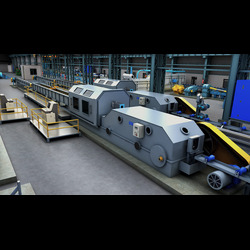
Seamless Pipe Manufacturing: Seamless pipes begin as solid round billets of steel or other metals. These billets undergo one of several processes to create hollow pipe forms. The most common method is the Mannesmann process, where a heated billet is pierced by a mandrel while being rotated between angled rollers, creating a hollow shell. This shell then undergoes multiple rolling and sizing operations to achieve final dimensions and wall thickness. Alternative processes include extrusion, where heated billets are forced through dies, and rotary piercing variations.
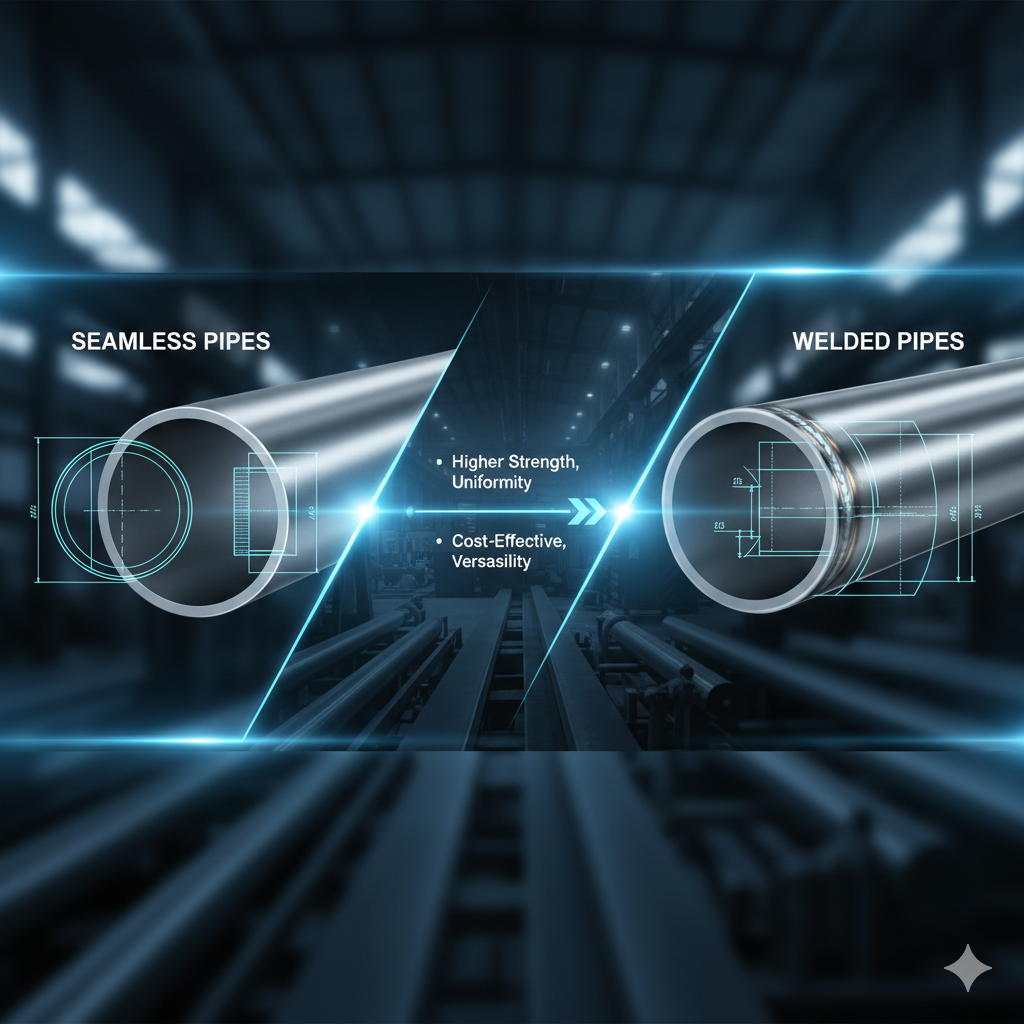
The key characteristic of seamless manufacturing is that the pipe contains no weld seam—it's one continuous piece of metal formed from solid stock. This creates uniform properties throughout the pipe circumference without longitudinal joints that could represent potential weak points.
Welded Pipe Manufacturing: Welded pipes start as flat plates or coiled strip that are formed into tubular shape and joined along a longitudinal seam. Electric resistance welding (ERW) pipes are formed from coiled strip that passes through forming rolls creating a tubular shape, with edges joined by electric resistance welding. Submerged arc welding (SAW) pipes use larger diameter plates rolled into tubular form with edges welded by submerged arc welding under flux blankets. Double submerged arc welding (DSAW) welds both inside and outside simultaneously for enhanced quality.
The defining characteristic of welded pipe is the presence of a longitudinal weld seam joining the edges. Modern welding technology and post-weld treatments can produce high-quality welds approaching base metal properties, but the weld seam remains a distinct feature differentiating welded from seamless pipe.
At Shalco, we employ advanced manufacturing processes for both seamless and welded pipes, with comprehensive quality control ensuring each type meets stringent specifications regardless of production method.
2. Mechanical Properties and Structural Integrity
The manufacturing differences between seamless and welded pipes translate to variations in mechanical properties and structural characteristics that affect performance in demanding applications.
Seamless Pipe Strengths: The absence of a weld seam in seamless pipes provides several mechanical advantages. Uniform grain structure throughout the pipe circumference ensures consistent strength in all directions without potential weak points at weld zones. This homogeneous structure delivers predictable, isotropic properties where tensile strength, yield strength, and ductility remain constant regardless of orientation.
For high-pressure applications, the lack of a weld seam eliminates concerns about weld quality, heat-affected zone properties, or potential weld defects that could compromise pressure containment. This makes seamless pipe the preferred or mandatory choice for the highest-pressure services and most critical applications where failure consequences are severe.
Welded Pipe Characteristics: Modern welded pipes, when properly manufactured, achieve mechanical properties approaching or matching seamless pipes in many applications. The weld seam, if properly executed with appropriate welding procedures, heat treatment, and inspection, can equal base metal strength. However, several considerations affect welded pipe properties:
The heat-affected zone (HAZ) adjacent to the weld experiences thermal cycles that alter microstructure and potentially affect properties. For carbon and low-alloy steels, HAZ hardening can occur, creating brittle zones susceptible to cracking. Post-weld heat treatment mitigates these effects but adds cost and complexity.
Weld quality variability introduces potential concerns. While automated welding with stringent quality control produces consistent, high-quality welds, any defects—incomplete fusion, porosity, inclusions, or cracking—compromise integrity. Non-destructive testing (radiography, ultrasonics) detects most defects, but inspection is not infallible.
Residual stresses from welding remain in the pipe even after cooling, potentially affecting performance under service loads or corrosive environments. Stress relief heat treatment reduces residual stresses but represents an additional manufacturing step.
Shalco's welded pipes undergo comprehensive quality control including 100% weld inspection using radiography or ultrasonics, ensuring weld quality meets or exceeds code requirements. Our manufacturing processes incorporate post-weld heat treatment when specifications require, delivering welded pipes with properties suitable for demanding applications.
3. Size Availability and Dimensional Range
The manufacturing processes for seamless and welded pipes impose different practical limitations on available sizes, affecting which type suits specific dimensional requirements.
Seamless Pipe Size Limitations: The piercing and rolling processes used for seamless pipe manufacture limit maximum practical diameters. Standard seamless pipes are readily available up to approximately 650-700mm (26-28 inches) outside diameter. Larger seamless pipes, while theoretically possible, become increasingly expensive and difficult to manufacture, with limited suppliers offering sizes above 700mm.
Wall thickness in seamless pipes can range from thin-wall tubes to heavy-wall pressure pipes, though extreme wall thicknesses may be limited by manufacturing equipment capabilities. The ratio of outside diameter to wall thickness must remain within practical ranges for the forming processes to work effectively.
For smaller diameter applications—particularly below 100mm (4 inches)—seamless pipes are often more cost-effective and readily available than welded alternatives, making them the standard choice for instrument tubing, heat exchanger tubes, and small-bore process piping.
Welded Pipe Size Advantages: Welded pipe manufacturing accommodates much larger diameters than seamless processes. Pipes exceeding 3000mm (120 inches) diameter are routinely manufactured through welding, with spiral welded pipes reaching even larger sizes. This makes welded pipe the only practical option for large-diameter applications including major pipelines, power plant piping, and large-diameter process vessels.
Wall thickness ranges are similarly flexible, with welded processes accommodating thin-wall pipe for structural applications and heavy-wall pipe for high-pressure service. The plate or coil forming approach provides greater flexibility in wall thickness selection compared to seamless manufacturing constraints.
At Shalco, our product range encompasses seamless pipes from 6mm to 660mm diameter and welded pipes from 168mm to over 2500mm diameter, ensuring we can supply appropriate pipe types across the full spectrum of size requirements our customers face.
4. Cost Considerations and Economic Factors
Cost differences between seamless and welded pipes significantly influence material selection decisions, particularly for large-quantity applications where material costs represent substantial project expenditures.
Seamless Pipe Pricing: Seamless pipes typically cost 20-40% more than equivalent welded pipes in comparable sizes, grades, and specifications. This premium reflects the more complex manufacturing process, greater material waste during piercing and forming, higher energy consumption, and generally lower production rates compared to welded pipe mills.
For smaller diameters (below 200mm), the cost differential narrows, and seamless pipes may actually cost less than welded alternatives in some grades due to economies of scale in seamless tube manufacturing. However, as diameters increase, the seamless cost premium grows substantially.
The seamless premium is justified when application requirements demand the superior properties, reliability, or code compliance that seamless pipes provide. For critical high-pressure service, corrosive environments, or safety-critical applications where failure consequences are severe, the incremental cost of seamless pipe represents sound risk management.
Welded Pipe Economics: Welded pipes offer significant cost advantages, particularly in larger diameters where seamless manufacturing becomes prohibitively expensive or impractical. The more efficient manufacturing process, higher production rates, and reduced material waste translate to lower unit costs.
For applications where welded pipe properties are adequate—moderate pressure ratings, non-critical service, or where thorough inspection verifies weld quality—the cost savings over seamless pipe can be substantial. In large-diameter applications where seamless pipes are unavailable, welded pipe represents the only viable option regardless of cost.
Shalco helps customers optimize costs by clearly identifying when seamless pipes are truly necessary versus when properly manufactured welded pipes serve adequately at significantly lower cost. Our transparent pricing and technical guidance enable informed cost-benefit decisions balancing initial material costs against long-term performance and reliability.
5. Corrosion Resistance and Service Life
The presence or absence of a weld seam affects corrosion behavior in ways that influence service life expectations and maintenance requirements in corrosive environments.
Seamless Pipe Corrosion Advantages: The uniform composition and microstructure of seamless pipes ensure consistent corrosion resistance throughout the pipe circumference. There are no weld zones with altered microstructure, residual stresses, or compositional variations that could create preferential corrosion sites.
In aggressive environments—particularly those involving chlorides, acids, or caustics at elevated temperatures—the absence of weld-related stress concentration and microstructural variations can provide superior corrosion resistance and extended service life. For sour service in oil and gas applications involving hydrogen sulfide, seamless pipes are often mandated to eliminate weld-related hydrogen-induced cracking risks.
Welded Pipe Corrosion Considerations: Properly manufactured welded pipes with appropriate post-weld treatments can achieve corrosion resistance approaching seamless pipes in many environments. However, several weld-related factors affect corrosion behavior:
Residual stresses in and around the weld can accelerate stress corrosion cracking in susceptible environments. Heat-affected zones may exhibit different corrosion rates than base metal due to microstructural changes. Incomplete weld penetration or weld defects create crevices where corrosive media accumulates, promoting localized attack.
For stainless steel welded pipes, weld sensitization—chromium carbide precipitation along grain boundaries—can severely compromise corrosion resistance unless proper welding procedures and post-weld heat treatments are employed. Low-carbon or stabilized stainless steel grades mitigate sensitization risks.
Shalco's stainless steel welded pipes undergo solution annealing or appropriate heat treatment when specifications require, ensuring weld zones maintain corrosion resistance equivalent to base metal. For critical corrosive services, we provide technical guidance on when seamless pipes offer meaningful corrosion resistance advantages justifying their cost premium.
6. Quality Assurance and Inspection Requirements
The different manufacturing processes and potential failure modes of seamless versus welded pipes drive distinct quality assurance and inspection requirements that affect total costs and confidence in pipe integrity.
Seamless Pipe Inspection: Seamless pipes undergo quality control focused on dimensional accuracy, mechanical properties, and internal/external surface quality. Ultrasonic testing detects internal defects, laminations, or inclusions throughout the pipe wall. Hydrostatic testing verifies pressure integrity. Chemical analysis and mechanical testing on representative samples confirm material properties meet specifications.
Because seamless pipes lack weld seams, longitudinal weld inspection is unnecessary, simplifying quality assurance compared to welded pipes. This reduced inspection requirement partially offsets seamless pipes' higher base cost.
Welded Pipe Inspection Requirements: Welded pipes require all the inspections applicable to seamless pipes plus comprehensive weld examination. Radiographic testing or ultrasonic testing of the full weld length detects weld defects including incomplete fusion, porosity, slag inclusions, or cracks. For critical applications, 100% weld inspection is mandatory rather than the sampling approaches acceptable for some seamless pipe testing.
The additional inspection requirements for welded pipes add cost and manufacturing time. However, modern automated inspection systems enable rapid, thorough examination with high reliability. At Shalco, we employ state-of-the-art inspection equipment including digital radiography and phased-array ultrasonics, ensuring comprehensive weld quality verification without excessive costs or delays.
Documented inspection results—radiographic films or digital images, ultrasonic scan records, hydrostatic test records—provide permanent quality records giving confidence in pipe integrity. Shalco provides complete inspection documentation with every shipment, including mill test reports, inspection records, and material certifications required for code compliance and traceability.
7. Application Suitability and Industry Standards
Industry codes, standards, and accumulated service experience establish guidance on when seamless versus welded pipes are preferred or mandated for specific applications.
Applications Favoring Seamless Pipes:
- High-pressure service above 15,000 psi where weld seam integrity is critical
- Sour service in oil and gas applications involving H₂S
- Critical safety applications in nuclear power, aerospace, or other safety-critical industries
- Corrosive environments with aggressive chemicals at elevated temperatures
- Small-bore piping below 4 inches where seamless is cost-competitive
- Hydraulic systems requiring maximum reliability and fatigue resistance
- Cryogenic service where brittle fracture concerns favor seamless construction
Applications Where Welded Pipes Excel:
- Large-diameter piping above 26 inches where seamless is unavailable or prohibitively expensive
- Moderate-pressure applications where welded pipe pressure ratings are adequate
- Cost-sensitive projects where budget constraints limit seamless pipe use
- Structural applications including columns, beams, and mechanical tubing
- General industrial piping with moderate temperature and pressure
- Water and wastewater systems where corrosion concerns are minimal
Code and Standard Requirements: Industry codes sometimes specify seamless pipe for certain services. ASME B31.3 process piping code, API standards for oil and gas, and pressure vessel codes each contain provisions affecting seamless versus welded pipe selection. Shalco maintains comprehensive knowledge of applicable codes, ensuring supplied pipes meet all requirements for intended services.
Making the Right Choice for Your Application
Selecting between seamless and welded pipes requires evaluating multiple factors simultaneously:
Consider seamless pipes when:
- Pressure, temperature, or corrosion conditions approach or exceed welded pipe limitations
- Critical safety considerations justify the cost premium
- Industry standards or codes mandate seamless construction
- Size requirements fall within seamless manufacturing capabilities
- Long-term reliability and minimal maintenance are paramount
Consider welded pipes when:
- Large diameters exceed seamless pipe availability
- Moderate operating conditions fall well within welded pipe capabilities
- Cost optimization is important and welded properties are adequate
- Comprehensive inspection verifies weld quality meets requirements
- Standards permit welded pipe for the intended service
At Shalco, we guide customers through these considerations, providing technical expertise to identify optimal solutions balancing performance, reliability, and cost. Our manufacturing capabilities in both seamless and welded pipes ensure we can supply whichever type best serves your specific requirements.
Shalco's Commitment to Quality in Both Pipe Types
Whether you select seamless or welded pipes, Shalco's commitment to quality, comprehensive testing, complete documentation, and responsive customer service ensures you receive products meeting your specifications and supporting successful project outcomes.
Our seamless pipes come from qualified mills employing proven manufacturing processes and rigorous quality control. Our welded pipes undergo comprehensive weld inspection with documentation providing confidence in weld integrity. Both pipe types include complete mill test reports, inspection records, and material certifications required for code compliance and project documentation.
Beyond supplying quality pipes, Shalco provides technical support helping you make informed decisions about pipe type selection, grade optimization, specification compliance, and application suitability. Our experienced team understands that pipe selection involves balancing multiple competing factors, and we provide objective guidance based on your specific requirements rather than pushing either seamless or welded products.
Conclusion: Knowledge Enables Optimal Decisions
The choice between seamless and welded pipes is not a matter of one being universally superior—each type has distinct advantages and limitations that make it optimal for different applications. Seamless pipes excel in high-pressure, critical, and corrosive services where their uniform properties and absence of weld seams justify higher costs. Welded pipes provide cost-effective solutions for large diameters and moderate-service applications where modern manufacturing and inspection produce reliable products at significantly lower costs.
Understanding the seven crucial differences examined in this guide—manufacturing processes, mechanical properties, size availability, costs, corrosion behavior, inspection requirements, and application suitability—empowers you to make informed decisions aligned with your specific project requirements, budget constraints, and performance expectations.
At Shalco, we're committed to helping you navigate these decisions with confidence, providing quality pipes, technical expertise, and responsive service that contribute to successful project outcomes. Whether your application demands seamless pipes' superior properties or welded pipes' cost advantages, Shalco delivers the products and support you need for reliable, long-lasting piping systems.
Contact Shalco today to discuss your specific piping requirements. Our technical team is ready to help you evaluate options, select optimal pipe types, and ensure you receive quality products meeting your exact specifications.