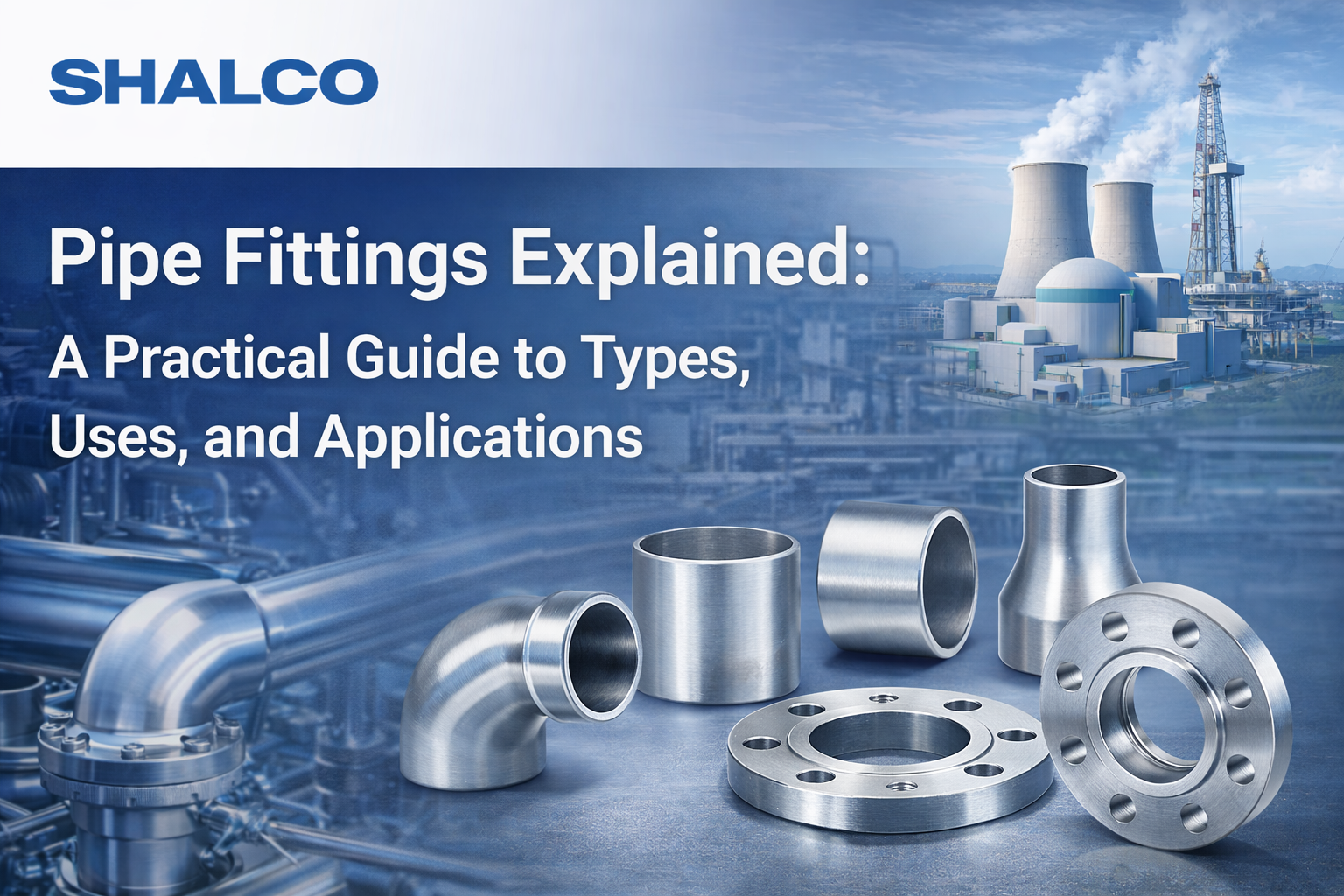
In every building you enter, every industrial facility you visit, and every municipal system serving your community, an intricate network of pipes delivers fluids, gases, and materials essential to modern life. Yet pipes alone cannot create functional systems—they require fittings, the specialized components that connect, redirect, change diameter, branch, and terminate piping networks. While often overlooked by those outside engineering and construction fields, pipe fittings represent critical components whose proper selection, specification, and installation directly impact system performance, safety, and longevity.
This comprehensive guide demystifies pipe fittings, explaining the various types, their specific applications, material considerations, and standards governing their use. Whether you're an engineer designing complex industrial systems, a contractor installing plumbing infrastructure, a maintenance professional troubleshooting facility issues, or simply curious about the hidden infrastructure surrounding us daily, understanding pipe fittings enhances appreciation for the sophisticated engineering enabling modern civilization.
What Are Pipe Fittings and Why Do They Matter?
Pipe fittings are components used in piping systems to connect straight pipe sections, adapt different sizes, change flow direction, branch or merge flow paths, and terminate or cap lines. Unlike pipes, which are typically straight sections of constant diameter, fittings feature specialized geometries engineered for specific functions.
The importance of proper fitting selection and installation cannot be overstated. Fittings often represent the weakest points in piping systems—locations where leaks, failures, and flow disturbances most commonly occur. A fitting failure in a high-pressure steam system can cause catastrophic equipment damage and injury. A leak at a threaded connection in a chemical plant may release hazardous materials. Even minor leaks in commercial plumbing systems waste resources and cause water damage over time.
Conversely, properly selected and installed fittings create reliable, leak-free systems operating safely for decades. Understanding fitting types, applications, and installation requirements is fundamental to engineering competent piping systems across all industries and applications.
Major Categories of Pipe Fittings
Pipe fittings can be categorized by their connection method—how they join to pipes and other fittings. Each connection method offers distinct advantages and limitations making it suitable for particular applications.
Threaded Fittings
Threaded fittings feature internal (female) or external (male) threads conforming to standardized thread forms—typically NPT (National Pipe Thread) in North America or BSP (British Standard Pipe) in many other regions. These fittings connect to threaded pipe ends by screwing components together, creating mechanical interference that, when properly sealed with thread sealant or tape, produces leak-resistant joints.
Advantages: Threaded fittings enable quick assembly and disassembly without special tools or skills beyond basic pipe wrenches. This makes them ideal for maintenance-intensive applications where periodic disassembly is anticipated. They're economical for smaller diameter systems (typically up to 4 inches) and don't require welding equipment or certified welders.
Limitations: Threaded connections are generally limited to lower-pressure applications compared to welded systems. The threading process slightly weakens pipe walls. Vibration can cause threaded joints to loosen over time unless properly secured. Thread engagement creates flow disturbances and potential leak paths compared to welded joints.
Common Applications: Threaded fittings dominate residential and light commercial plumbing, compressed air systems, low-pressure steam and condensate lines, instrumentation connections, and applications requiring frequent disassembly for maintenance or reconfiguration.
Welded Fittings
Welded fittings, also called butt-weld fittings, feature plain ends designed to be joined to pipe by welding—typically arc welding processes like GTAW (TIG), GMAW (MIG), or SMAW (stick welding). Butt-weld fittings have wall thicknesses matching pipe schedules and are beveled to facilitate proper weld joint preparation.
Advantages: Welded joints create the strongest, most leak-resistant connections available. They handle the highest pressures and temperatures, withstand vibration and shock loading, present smooth internal profiles minimizing flow disturbance and pressure drop, and when properly executed, essentially create continuous pipe with no weak points.
Limitations: Welding requires skilled labor, specialized equipment, and often quality control procedures including radiographic or ultrasonic examination. Welded systems are essentially permanent—modifications require cutting and re-welding. Installation is more time-consuming and expensive than mechanical connections.
Common Applications: Welded fittings are standard in high-pressure and high-temperature process piping, power generation facilities, oil and gas pipelines, chemical plants, refineries, and any critical application where leak integrity and long-term reliability are paramount.
Socket Weld Fittings
Socket weld fittings represent a hybrid between threaded and butt-weld designs. These fittings feature recesses (sockets) that accept pipe ends, which are then fillet welded around the socket's outer edge.
Advantages: Socket weld fittings simplify alignment compared to butt-welding, require less precise pipe cutting and beveling, and are faster to install than butt-weld fittings while providing superior strength compared to threaded connections. They're particularly advantageous for small-bore piping (typically 2 inches and smaller) where butt-welding is more difficult.
Limitations: The socket design creates a crevice that can trap fluids—problematic in corrosive service or high-purity applications. Socket welds are more susceptible to fatigue failure under cyclic loading compared to full-penetration butt welds. They're generally limited to smaller pipe sizes.
Common Applications: Socket weld fittings are common in small-bore process piping, particularly in refineries and chemical plants, instrumentation and sampling systems, and applications where installation speed and alignment simplification justify the design's limitations.
Flanged Fittings
Flanged fittings feature flat, circular flanges with bolt holes enabling connection to mating flanges on pipes, valves, equipment, or other fittings. Gaskets between flange faces create seals when bolts are tightened, compressing the gasket.
Advantages: Flanged connections enable easy disassembly for maintenance, inspection, or equipment replacement without cutting pipe. They accommodate large diameters more practically than threaded connections and handle high pressures when properly designed and installed. Flanges facilitate connections to equipment like pumps, heat exchangers, and vessels.
Limitations: Flanged connections are more expensive than other connection methods due to flange cost, gasket requirements, and bolt/nut hardware. They require significant space for bolt circles and wrench access. Gasket compression and bolt tensioning require careful execution to achieve reliable sealing. Flange faces must be parallel and properly aligned.
Common Applications: Flanged connections dominate pump and compressor suction/discharge connections, heat exchanger connections, valve installations requiring maintenance access, pipeline sections requiring periodic inspection or cleaning, and large-diameter piping systems.
Compression Fittings
Compression fittings create mechanical seals using a compression ring (ferrule) that deforms when a compression nut is tightened, creating a seal between fitting body, ferrule, and pipe or tubing outer diameter.
Advantages: Compression fittings require no special tools beyond wrenches, no welding or threading, and minimal skill to install correctly. They're ideal for soft materials like copper, plastic, and thin-wall tubing that can't be threaded. They allow disassembly and reassembly (within limits).
Limitations: Compression fittings are limited to lower pressures than welded or high-quality threaded connections. They're typically restricted to smaller sizes. Reliability depends significantly on installation quality—over-tightening can damage ferrules while under-tightening causes leaks. They're more expensive per fitting than threaded alternatives.
Common Applications: Compression fittings are standard in instrumentation and control tubing systems, residential copper water supply lines, hydraulic and pneumatic systems using tubing rather than pipe, and laboratory plumbing and gas supply systems.
Common Fitting Types and Their Functions
Beyond connection methods, fittings are categorized by their geometric function—what they do within the piping system.
Elbows
Elbows change piping direction, available in various angles—90° (quarter bend) and 45° being most common, though other angles exist for special applications. Elbows may be standard radius (radius of curvature approximately equal to pipe diameter) or long radius (radius approximately 1.5 times pipe diameter). Long radius elbows create less pressure drop and flow turbulence but require more space.
Elbows are among the most common fittings in any piping system, enabling systems to navigate around obstacles, change elevation, and route between equipment. Proper elbow selection minimizes pressure drop and erosion while accommodating spatial constraints.
Tees
Tees create branch connections, featuring three openings—typically one in-line with the main flow and one perpendicular branch. Equal tees have all three openings of the same size, while reducing tees have one or more openings of different sizes.
Tees enable distribution systems where flow splits to multiple destinations and collection systems where multiple flows merge. Proper tee orientation considers flow patterns—flow entering through the branch creates different hydraulic behavior than flow entering the run and splitting.
Reducers
Reducers transition between different pipe sizes, available as concentric reducers (both centerlines aligned) or eccentric reducers (one side flat, maintaining constant elevation on that side). Eccentric reducers are critical in applications where air or vapor accumulation (top flat) or sediment settling (bottom flat) must be controlled.
Reducers enable optimal pipe sizing throughout systems—larger diameters where flow rates are high, smaller diameters where flow splits or velocity requirements change. This optimization balances pressure drop, installation cost, and system performance.
Caps and Plugs
Caps cover pipe ends externally while plugs insert into openings internally, both serving to terminate or temporarily seal piping. Caps are typically welded or socket-welded, while plugs may be threaded, allowing temporary closure of branch connections or future expansion points.
Couplings and Unions
Couplings join two pipe ends in straight runs. Standard couplings are permanent (threaded or welded), while unions feature three-part designs enabling disconnection without rotating pipes—essential when pipes are fixed at both ends or when disconnection is anticipated.
Crosses
Crosses provide four-way connections, essentially two perpendicular tees intersecting. While less common than tees due to complexity and cost, crosses serve specific applications requiring four-branch intersections in compact spaces.
Material Considerations in Fitting Selection
Fitting material must be compatible with both the fluid/gas being conveyed and the operating conditions while matching pipe material to ensure compatibility in welded systems and equivalent corrosion resistance.
Carbon Steel Fittings
Carbon steel dominates industrial piping for non-corrosive service, offering excellent strength, weldability, and economy. However, carbon steel corrodes in many environments—water, steam, acids, and atmospheric exposure all attack carbon steel requiring protective coatings or corrosion allowances in design.
Stainless Steel Fittings: The Superior Choice
Stainless steel fittings provide exceptional corrosion resistance, making them essential for corrosive services, high-purity applications, food and pharmaceutical processing, and environments where maintenance access is limited or contamination is unacceptable.
This is where industry leaders like Shalco Industries make critical contributions to infrastructure reliability and longevity. As a premier manufacturer and supplier of stainless steel pipe fittings, Shalco Industries provides comprehensive fitting solutions across all connection types and geometric configurations.
Shalco Industries' Stainless Steel Fitting Portfolio: The company maintains extensive inventory spanning austenitic stainless steels (304, 304L, 316, 316L), duplex and super-duplex grades for enhanced strength and corrosion resistance, and specialty alloys for extreme service conditions. This comprehensive material range ensures optimal fitting selection for diverse applications—from food processing requiring sanitary 316L fittings to chemical plants needing super-duplex fittings for chloride service.
Quality Assurance Excellence: Shalco Industries' fittings meet or exceed international standards including ASME B16.9 (butt-weld fittings), ASME B16.11 (socket-weld and threaded fittings), and MSS-SP specifications. Every fitting undergoes rigorous quality control—dimensional verification, material certification, and surface inspection—ensuring conformance to specifications and reliable performance.
Manufacturing Capabilities: Beyond standard catalog fittings, Shalco Industries offers custom fabrication for special sizes, unusual configurations, and application-specific requirements. The company's manufacturing facilities feature advanced forming, machining, and welding equipment enabling production of complex fittings meeting tight tolerances.
Technical Support: Shalco Industries provides engineering assistance helping customers select appropriate fitting types, materials, and specifications for their applications. This technical support ensures optimal system design while avoiding common specification errors that compromise performance or create installation difficulties.
Comprehensive Inventory: Maintaining substantial fitting inventory across sizes and types enables Shalco Industries to support both planned projects and emergency maintenance requirements. Quick availability minimizes downtime when failures occur and prevents project delays when fittings are needed on short notice.
Other Fitting Materials
Copper and Copper Alloys: Dominant in plumbing and HVAC applications, offering good corrosion resistance, antimicrobial properties, and easy soldering.
PVC and Plastic Fittings: Economical and corrosion-proof for non-pressure applications, cold water systems, and drain-waste-vent (DWV) plumbing.
Ductile Iron: Common in municipal water and wastewater systems for large diameters where high strength is needed at moderate cost.
Standards and Specifications Governing Fittings
Pipe fittings are manufactured to various standards ensuring dimensional compatibility, material quality, and pressure-temperature ratings. Understanding these standards is essential for proper specification.
ASME B16.9: Covers factory-made wrought butt-weld fittings in carbon and alloy steel, the dominant standard for welded fittings in industrial applications.
ASME B16.11: Specifies forged fittings for socket-weld and threaded connections, common in small-bore process piping.
ASME B16.28: Covers wrought steel butt-weld short radius elbows and returns for special applications where space is extremely limited.
MSS-SP-43, MSS-SP-75, and others: Manufacturers Standardization Society specifications covering various specialized fittings not addressed in ASME standards.
ASTM Material Specifications: Define chemical composition and mechanical properties for fitting materials (e.g., ASTM A234 for carbon steel fittings, ASTM A403 for stainless steel fittings).
Practical Application Considerations
Successful piping systems require more than selecting correct fitting types and materials—installation quality and system design considerations are equally critical.
Pressure and Temperature Ratings
Fittings must be rated for system design pressure and temperature. Ratings depend on material, wall thickness, and connection type. Shalco Industries provides complete pressure-temperature ratings for all supplied fittings, enabling engineers to verify suitability for intended service.
Flow Considerations
Fitting geometry affects pressure drop and flow patterns. Excessive elbows increase pumping costs. Sharp radius elbows cause turbulence and erosion in high-velocity service. Engineers must balance spatial constraints against hydraulic performance when routing piping.
Thermal Expansion
Piping systems expand and contract with temperature changes. Fittings must accommodate these movements without excessive stress. Expansion loops, flexible couplings, or expansion joints may be required in high-temperature systems.
Code Compliance
Piping systems in regulated industries must comply with codes—ASME B31.1 (power piping), B31.3 (process piping), B31.4 (liquid petroleum transport), and others. These codes specify fitting types, materials, and installation requirements ensuring safety and reliability.
Emerging Trends in Pipe Fitting Technology
Pipe fitting technology continues evolving, driven by new materials, manufacturing methods, and application requirements.
Prefabrication and Modular Construction: Increasing fitting assembly occurs in controlled shop environments rather than field installation, improving quality and reducing installation time.
Advanced Materials: Development of higher-strength, more corrosion-resistant alloys extends fitting capabilities into increasingly demanding services.
Press-Connect Technology: Mechanical fittings using special pressing tools create reliable connections without welding, threading, or soldering—gaining acceptance in commercial plumbing and HVAC applications.
3D Printing: Additive manufacturing enables custom fitting geometries impossible through conventional manufacturing, though widespread adoption awaits material and regulatory developments.
Conclusion: The Critical Role of Quality Fittings
Pipe fittings represent the essential connectors enabling functional fluid transport systems across every industry and application. From residential plumbing to nuclear power plants, from food processing to petrochemical facilities, from municipal water systems to pharmaceutical manufacturing, properly selected and installed fittings create reliable, safe, leak-free piping infrastructure.
The difference between adequate and excellent piping systems often comes down to fitting quality, proper specification, and installation excellence. This is why partnering with reputable suppliers like Shalco Industries matters—the company's commitment to material quality, manufacturing precision, comprehensive inventory, and technical support ensures that fittings perform reliably throughout their intended service life.
Whether you're designing new systems, maintaining existing infrastructure, or troubleshooting problems, understanding pipe fittings—their types, applications, materials, and proper selection criteria—empowers better decisions that enhance system performance, safety, and longevity. The hidden network of fittings connecting our built environment deserves the attention and quality that ensures modern civilization's essential systems function reliably, safely, and efficiently for generations to come.