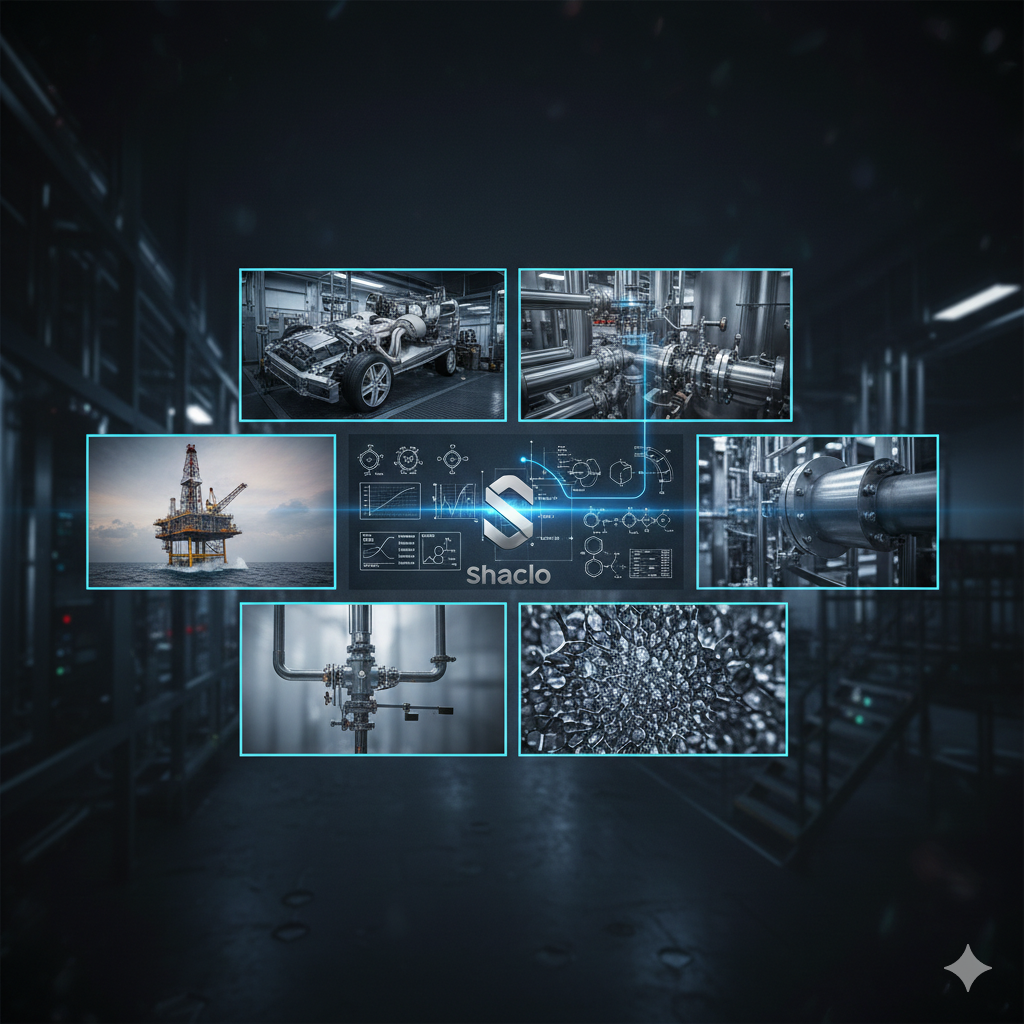
The Evolution of Industrial Alloys
The global manufacturing landscape is experiencing a transformative shift, powered by breakthrough developments in next-generation stainless steel and copper nickel alloys. These advanced materials are redefining performance standards across critical industries—from marine engineering and oil & gas to aerospace, renewable energy, and chemical processing.
As industries demand materials that can withstand extreme temperatures, corrosive environments, and unprecedented mechanical stress, traditional alloys are being enhanced and reimagined. Modern metallurgy is producing high-performance stainless steel grades and advanced copper nickel alloy compositions that offer superior strength, enhanced corrosion resistance, improved machinability, and extended service life—all while supporting sustainability goals through recyclability and longevity.
This comprehensive guide explores how innovative metal alloys are driving industrial innovation in 2026 and beyond, examining their unique properties, applications, manufacturing advances, and future potential.
Understanding Next-Generation Stainless Steel Alloys
What Makes Stainless Steel "Next-Generation"?
Traditional stainless steel has served industries well for over a century, but modern applications demand more. Next-gen stainless steel alloys incorporate:
Advanced Alloying Elements:
- Nitrogen-enhanced compositions for superior strength
- Molybdenum and tungsten for improved corrosion resistance
- Titanium and niobium stabilization for weldability
- Copper additions for enhanced antimicrobial properties
- Rare earth element micro-additions for grain refinement
Innovative Manufacturing Processes:
- Powder metallurgy for ultra-fine microstructures
- Additive manufacturing (3D printing) compatibility
- Advanced heat treatment protocols
- Precision cold working techniques
- Surface engineering and nano-coating technologies
Enhanced Performance Characteristics:
- Higher tensile strength (up to 2000+ MPa)
- Improved pitting and crevice corrosion resistance
- Extended temperature range capability (-196°C to 1200°C)
- Better fatigue resistance and impact toughness
- Reduced maintenance requirements and lifecycle costs
Key Next-Generation Stainless Steel Grades
1. Duplex and Super Duplex Stainless Steels
Composition Innovation: Duplex stainless steels combine austenitic and ferritic microstructures in roughly equal proportions, creating a material stronger than conventional austenitic grades.
Popular Grades:
- 2205 Duplex: 22% Cr, 5% Ni, 3% Mo
- 2507 Super Duplex: 25% Cr, 7% Ni, 4% Mo
- SAF 2906: Ultra-high nitrogen content for extreme environments
Key Advantages:
- Twice the yield strength of austenitic 316L
- Superior stress corrosion cracking (SCC) resistance
- Excellent resistance to chloride environments
- Cost-effective (lower nickel content than austenitic grades)
- High energy absorption in impact scenarios
Industrial Applications:
- Offshore oil and gas platforms
- Desalination plants and seawater systems
- Chemical tankers and pressure vessels
- Pulp and paper processing equipment
- Heat exchangers in aggressive environments
Innovation Highlight: Recent developments in lean duplex grades (LDX 2101, LDX 2404) offer duplex benefits at lower costs, making them viable alternatives to 304/316 austenitic steels in many applications.
2. High-Nitrogen Austenitic Stainless Steels
Composition Innovation: Nitrogen (0.4-0.9%) replaces carbon and some nickel, creating non-magnetic, highly corrosion-resistant alloys.
Representative Grades:
- Nitronic 50 (XM-19): High strength with excellent galling resistance
- Nitronic 60: Superior wear and corrosion resistance
- S20910: Ultra-high nitrogen for extreme service
Key Advantages:
- Exceptional work hardening capability
- Non-magnetic properties (critical for medical/electronic applications)
- Superior resistance to localized corrosion
- Higher strength without sacrificing ductility
- Reduced metal-to-metal galling
Industrial Applications:
- Medical implants and surgical instruments
- Cryogenic storage and transport systems
- High-performance pump and valve components
- Marine propulsion shafts
- Oil and gas downhole equipment
Innovation Highlight: Pressurized electroslag remelting (PESR) now enables nitrogen content above 0.5%, creating stainless steels with strength rivaling some tool steels while maintaining corrosion resistance.
3. Precipitation-Hardening (PH) Stainless Steels
Composition Innovation: These alloys achieve exceptional strength through age-hardening heat treatments while maintaining good corrosion resistance.
Popular Grades:
- 17-4 PH (630): Most widely used PH stainless
- 15-5 PH (XM-12): Better corrosion resistance than 17-4
- Custom 465: Ultra-high strength for aerospace
- 13-8 Mo PH: Superior toughness
Key Advantages:
- Tensile strength up to 1400 MPa (200 ksi)
- Excellent combination of strength and corrosion resistance
- Good fabricability before heat treatment
- Minimal distortion during hardening
- Magnetic properties useful for specific applications
Industrial Applications:
- Aerospace structural components
- Chemical processing equipment
- Nuclear reactor components
- High-performance fasteners
- Offshore platform structures
- Precision mechanical parts
Innovation Highlight: New-generation PH alloys like Custom 465 achieve 1800+ MPa strength while maintaining 12% elongation—ideal for aerospace landing gear and defense applications.
4. High-Temperature Stainless Steels
Composition Innovation: Advanced heat-resistant stainless steels (HRSS) engineered for service above 600°C.
Leading Grades:
- 310S: 25Cr-20Ni for temperatures to 1100°C
- 253 MA: Nitrogen-strengthened for creep resistance
- Sandvik Sanicro 25: For ultra-supercritical power plants
- HR3C: Advanced boiler tube material
Key Advantages:
- Oxidation resistance to 1200°C
- Creep strength at elevated temperatures
- Thermal cycling resistance
- Reduced carburization and sulfidation
- Extended component life in heat applications
Industrial Applications:
- Gas turbine components
- Industrial furnace equipment
- Petrochemical reformer tubes
- Heat treatment fixtures
- Exhaust systems and manifolds
- Power generation boilers
Innovation Highlight: Oxide dispersion strengthened (ODS) stainless steels, created through powder metallurgy, maintain strength above 1000°C—enabling next-generation power plants operating at higher efficiencies.
5. Antimicrobial Stainless Steels
Composition Innovation: Copper-bearing stainless steels (typically 1-3% Cu) with proven antimicrobial properties.
Notable Grades:
- 304Cu: Standard 304 with copper addition
- 316Cu: Marine-grade with antimicrobial benefits
- Specialty formulations: Silver ion surface treatments
Key Advantages:
- EPA-registered antimicrobial surface
- Kills 99.9% of bacteria within 2 hours
- Self-sanitizing without chemicals
- Maintains corrosion resistance
- Permanent antimicrobial effect (not a coating)
Industrial Applications:
- Hospital equipment and surfaces
- Food processing machinery
- Pharmaceutical manufacturing
- Public transportation touchpoints
- HVAC systems
- Water treatment facilities
Innovation Highlight: Post-pandemic demand has accelerated development, with new surface texturing techniques enhancing antimicrobial effectiveness while improving aesthetics.
Next-Generation Copper Nickel Alloys: Marine to Renewable Energy
The Copper-Nickel Advantage
Copper nickel alloys (also called cupronickel) combine copper's excellent thermal and electrical conductivity with nickel's corrosion resistance, creating materials ideally suited for marine, energy, and heat transfer applications.
Evolution of Copper Nickel Alloy Technology
Traditional copper nickel alloys (70/30, 90/10) have been enhanced through:
Compositional Refinements:
- Optimized iron content (1.5-2%) for superior seawater resistance
- Manganese additions for strength and fabricability
- Trace element control for improved anti-biofouling properties
- Chromium additions for specialized high-temperature applications
Manufacturing Advances:
- Continuous casting for improved homogeneity
- Controlled thermomechanical processing
- Advanced welding metallurgy
- Specialized surface treatments
Key Copper Nickel Alloy Grades and Innovations
1. 90-10 Copper Nickel (C70600)
Composition:
- 90% Copper, 10% Nickel, 1.5% Iron, 1% Manganese
Enhanced Characteristics:
- Excellent seawater corrosion resistance
- Natural anti-biofouling properties (resistant to marine organism attachment)
- Good thermal conductivity
- Superior erosion-corrosion resistance
- Excellent fabricability and weldability
Primary Applications:
- Seawater piping systems
- Condensers and heat exchangers
- Desalination plant components
- Ship hulls and boat fittings
- Offshore platform piping
- Coastal power plant cooling systems
Innovation Highlight: Modern 90-10 CuNi now incorporates precisely controlled iron content, creating a protective ferric hydroxide film that enhances corrosion resistance by 40% compared to earlier formulations.
2. 70-30 Copper Nickel (C71500)
Composition:
- 70% Copper, 30% Nickel, 0.5-1% Iron, 1% Manganese
Enhanced Characteristics:
- Superior corrosion resistance to 90-10 in aggressive environments
- Higher strength and hardness
- Excellent resistance to sulfide pollution
- Better high-velocity seawater performance
- Enhanced resistance to cavitation and impingement
Primary Applications:
- Naval vessel hull sheathing
- High-performance heat exchangers
- Marine propeller shafts
- High-pressure seawater systems
- Offshore oil and gas equipment
- Advanced desalination systems
Innovation Highlight: Laser-welded 70-30 CuNi tubing for heat exchangers eliminates brazing, reducing manufacturing time by 60% while improving joint integrity.
3. Nickel Aluminum Bronze (NAB)
Composition:
- Copper base with 9-11% Aluminum, 4-5% Nickel, 4-5% Iron, 1% Manganese
Enhanced Characteristics:
- Highest strength among copper alloys (550+ MPa tensile)
- Exceptional seawater corrosion resistance
- Outstanding wear and cavitation resistance
- Excellent casting and machining properties
- Natural anti-fouling properties
Primary Applications:
- Marine propellers and impellers
- Pump and valve components
- Offshore drilling equipment
- Naval defense applications
- Hydroelectric turbine components
- Seawater hydraulic systems
Innovation Highlight: Additive manufacturing (3D printing) of nickel aluminum bronze is now commercially viable, enabling complex geometries for marine propulsion systems previously impossible with traditional casting.
4. Copper Nickel Iron Alloys
Composition:
- Optimized Cu-Ni-Fe ternary systems with controlled ratios
Enhanced Characteristics:
- Tailored for specific temperature ranges
- Balanced electrical and thermal properties
- Superior resistance to biofouling
- Improved weldability over standard grades
- Cost optimization through iron substitution
Primary Applications:
- Specialized heat exchanger tubes
- Electrical resistance heating elements
- Precision temperature sensors
- Thermocouple sheaths
- Marine electrical systems
Innovation Highlight: Computational thermodynamics modeling now enables custom alloy design for specific operational environments, reducing development time from years to months.
5. High-Performance Copper Nickel Chromium Alloys
Composition:
- Copper-nickel base with 0.5-2% chromium additions
Enhanced Characteristics:
- Extended service temperature range (up to 400°C)
- Enhanced oxidation resistance
- Superior mechanical properties at elevated temperatures
- Improved resistance to sulfur compounds
- Better performance in acidic environments
Primary Applications:
- Geothermal energy systems
- High-temperature heat exchangers
- Petrochemical processing equipment
- Advanced power generation systems
- Hydrogen production and transport systems
Innovation Highlight: CuNi-Cr alloys are proving critical for green hydrogen infrastructure, offering corrosion resistance in hydrogen-rich environments while maintaining thermal conductivity for efficient heat management.
Industry Applications: Where Next-Gen Alloys Excel
1. Marine and Offshore Engineering
Challenge: Aggressive seawater environments, biofouling, high pressures, extreme weather
Alloy Solutions:
- Super duplex stainless steels for offshore platform structures
- 70-30 copper nickel for seawater cooling systems
- Nickel aluminum bronze for propellers and impellers
- High-nitrogen stainless steels for submarine components
Performance Impact:
- 50% longer service life than previous-generation materials
- 30% reduction in maintenance costs
- Improved fuel efficiency through weight reduction
- Enhanced safety in critical applications
Case Study: A North Sea oil platform replaced 316L stainless steel piping with 2507 super duplex, extending maintenance intervals from 3 years to 15+ years while reducing weight by 25%.
2. Oil and Gas Industry
Challenge: Sour gas (H₂S), CO₂, high pressures, extreme temperatures, chloride stress corrosion
Alloy Solutions:
- Duplex stainless steels for downhole tubing and casings
- High-alloy austenitic stainless for sour service
- Nickel-based super alloys with copper-nickel components
- Precipitation-hardening stainless for high-strength fasteners
Performance Impact:
- Reduced well abandonment due to corrosion failure
- Extended equipment life in harsh environments
- Safer operations with fewer integrity issues
- Cost savings through reduced replacement cycles
Innovation Application: Deepwater drilling now uses 25Cr super duplex in subsea manifolds, operating at depths exceeding 3000 meters with service lives approaching 30 years.
3. Chemical and Petrochemical Processing
Challenge: Corrosive chemicals, high temperatures, thermal cycling, contamination prevention
Alloy Solutions:
- High-molybdenum stainless steels (6Mo alloys like 254 SMO)
- Duplex stainless steels for reactor vessels
- Copper nickel alloys for heat exchangers handling corrosive media
- Nitrogen-strengthened austenitic grades for mixing equipment
Performance Impact:
- Purity maintenance in pharmaceutical production
- Reduced product contamination
- Lower total cost of ownership
- Improved process efficiency through better heat transfer
Case Study: A chlorine production facility switched to 2205 duplex for electrolysis cell components, achieving 12-year continuous operation versus 4-year life with previous materials.
4. Renewable Energy Systems
Challenge: Variable operating conditions, remote locations, long service life requirements, sustainability
Alloy Solutions:
- Lean duplex stainless steels for solar thermal systems
- Copper nickel alloys for geothermal applications
- High-temperature stainless for concentrated solar power
- Corrosion-resistant alloys for offshore wind turbines
Performance Impact:
- 25+ year design life for offshore wind components
- Minimal maintenance in remote installations
- Improved energy conversion efficiency
- Recyclability supporting circular economy
Innovation Application: Offshore wind turbine foundations use 2304 lean duplex, offering 2x the strength of traditional structural steel at comparable cost, enabling lighter designs for deeper waters.
5. Food and Beverage Processing
Challenge: Hygiene requirements, frequent cleaning, corrosion from cleaning agents, product quality
Alloy Solutions:
- Antimicrobial copper-bearing stainless steels
- High-purity austenitic grades (304L, 316L with controlled sulfur)
- Electropolished super austenitic for dairy processing
- Duplex stainless for brewery equipment
Performance Impact:
- Enhanced food safety through antimicrobial properties
- Easier cleaning and sanitization
- Improved product shelf life
- Regulatory compliance assurance
Case Study: A dairy processing plant implemented 304Cu stainless throughout production areas, reducing bacterial contamination by 87% and exceeding USDA sanitation standards.
6. Desalination and Water Treatment
Challenge: Seawater corrosion, biofouling, high operating pressures, energy efficiency
Alloy Solutions:
- Super duplex stainless steels for reverse osmosis systems
- 70-30 copper nickel for multi-stage flash distillation
- 6Mo super austenitic for brine handling
- Titanium-copper nickel composites for specialized applications
Performance Impact:
- 40% reduction in energy consumption through improved heat transfer
- Extended membrane life through better pre-treatment
- Lower operational costs
- Increased water production capacity
Innovation Application: Modern desalination plants use hybrid heat exchangers with 70-30 CuNi tubes and super duplex headers, achieving 95%+ uptime over 20-year service lives.
7. Aerospace and Defense
Challenge: Extreme weight constraints, high strength requirements, temperature extremes, reliability
Alloy Solutions:
- Precipitation-hardening stainless steels for structural components
- High-temperature stainless for exhaust systems
- Copper nickel alloys for aerospace electrical systems
- Custom alloys for hypersonic applications
Performance Impact:
- Weight reduction enabling longer range/higher payloads
- Improved fuel efficiency
- Enhanced safety margins
- Reduced lifecycle costs
Case Study: Next-generation fighter jets use Custom 465 PH stainless for landing gear, achieving 25% weight savings versus previous titanium designs while maintaining strength and corrosion resistance.
8. Medical and Pharmaceutical
Challenge: Biocompatibility, sterilization resistance, precision manufacturing, regulatory compliance
Alloy Solutions:
- High-nitrogen stainless steels for implants
- Antimicrobial stainless for hospital equipment
- Precision-ground stainless for surgical instruments
- Copper-bearing alloys for antimicrobial surfaces
Performance Impact:
- Improved patient outcomes through better implant performance
- Reduced hospital-acquired infections
- Longer instrument life
- Enhanced sterilization capabilities
Innovation Application: Orthopedic implants now utilize Nitronic 50 with surface modification, providing osseointegration comparable to titanium at lower cost with superior wear resistance.
Manufacturing Innovations Enabling Next-Gen Alloys
1. Additive Manufacturing (Metal 3D Printing)
Technology Impact: Metal additive manufacturing has revolutionized how stainless steel and copper nickel alloys are formed:
Processes:
- Selective Laser Melting (SLM): For complex stainless steel components
- Electron Beam Melting (EBM): For reactive and refractory alloys
- Directed Energy Deposition (DED): For large-scale repairs and hybrid manufacturing
- Binder Jetting: For high-volume production
Benefits:
- Complex geometries impossible with traditional methods
- Topology optimization for weight reduction
- Rapid prototyping and customization
- Reduced material waste (up to 90% savings)
- Consolidated assemblies (fewer parts, no joining)
- On-demand production reducing inventory
Applications:
- Marine propellers (nickel aluminum bronze)
- Aerospace brackets and connectors (17-4 PH)
- Heat exchangers with optimized flow paths (316L)
- Custom medical implants (high-nitrogen stainless)
- Spare parts for legacy equipment
Challenges Being Addressed:
- Surface finish requirements (post-processing developments)
- Certification and qualification standards
- Production speed for high-volume applications
- Material property consistency
2. Advanced Powder Metallurgy
Technology Impact: Powder metallurgy enables ultra-fine microstructures and near-net-shape manufacturing:
Processes:
- Hot Isostatic Pressing (HIP): For dense, defect-free components
- Metal Injection Molding (MIM): For complex small parts at scale
- Spark Plasma Sintering (SPS): For advanced material development
- Powder Forging: Combining PM benefits with forging strength
Benefits:
- Homogeneous composition throughout part
- Fine grain structures enhancing properties
- Near-net-shape reducing machining
- Ability to create unique compositions impossible by melting
- Controlled porosity for filtration applications
Applications:
- High-performance pump components
- Precision valve seats
- Wear-resistant tooling
- Aerospace fasteners
- Medical device components
3. Precision Casting Technologies
Technology Impact: Advanced casting methods for copper nickel and stainless steel components:
Processes:
- Investment Casting (Lost Wax): For complex shapes with excellent finish
- Vacuum Arc Remelting (VAR): For ultra-clean alloys
- Electroslag Remelting (ESR): For large ingots with superior quality
- Centrifugal Casting: For tubular products
Benefits:
- Reduced porosity and inclusions
- Improved mechanical properties
- Better surface finish
- Complex internal passages
- Cost-effective for medium volumes
Applications:
- Marine propellers and impellers
- Pump and valve bodies
- Turbine components
- Pipe fittings and flanges
4. Advanced Surface Engineering
Technology Impact: Surface treatments enhance base alloy performance:
Technologies:
- Laser Surface Melting: For localized hardening
- Physical Vapor Deposition (PVD): For functional coatings
- Plasma Nitriding: For enhanced surface hardness
- Electropolishing: For ultra-smooth, corrosion-resistant surfaces
- Shot Peening: For improved fatigue resistance
Benefits:
- Enhanced corrosion resistance
- Improved wear characteristics
- Better biocompatibility
- Aesthetic improvements
- Tailored surface properties without changing bulk material
Applications:
- Medical implants and instruments
- Food processing equipment
- Marine components
- Aerospace parts
5. Digital Twin and AI-Driven Alloy Design
Technology Impact: Computational methods accelerating alloy development:
Approaches:
- CALPHAD Modeling: Predicting phase stability
- Machine Learning: Correlating composition to properties
- Finite Element Analysis: Simulating component performance
- Digital Twins: Virtual testing before physical production
Benefits:
- Reduced development time (years to months)
- Lower R&D costs
- Optimization for specific applications
- Predictive maintenance capabilities
- Rapid property prediction
Applications:
- Custom alloy development for extreme environments
- Process parameter optimization
- Failure analysis and prevention
- Lifecycle performance prediction
Sustainability and the Circular Economy
Environmental Benefits of Next-Gen Alloys
1. Extended Service Life = Reduced Resource Consumption
- Duplex stainless lasting 2-3x longer than carbon steel
- Copper nickel systems operating 30+ years with minimal maintenance
- Reduced replacement frequency conserving raw materials
2. 100% Recyclability
- Stainless steel: Most recycled material globally (70%+ recycled content)
- Copper: Infinite recyclability with no property degradation
- Nickel: Critical element with established recycling infrastructure
- Closed-loop manufacturing increasingly standard
3. Energy Efficiency
- Better heat transfer in copper nickel heat exchangers
- Lighter weight alloys reducing transportation energy
- Lower maintenance energy (less frequent replacement/repair)
- Enabling renewable energy systems (wind, solar, geothermal)
4. Reduced Environmental Impact
- Lower lifecycle carbon footprint despite higher initial energy
- Elimination of protective coatings (no VOCs or heavy metals)
- Natural anti-fouling properties reducing biocide use
- Cleaner production processes with modern steelmaking
Circular Economy Initiatives
Scrap-to-Product Programs: Major manufacturers now guarantee recycled content:
- Minimum 60% recycled stainless steel in commodity grades
- Copper nickel alloys with 40%+ recycled copper
- Traceability through digital material passports
Design for Disassembly: Next-gen alloys specified with end-of-life in mind:
- Modular construction for easy separation
- Minimized mixed-material assemblies
- Standardized alloy grades for simplified sorting
Industrial Symbiosis:
- Stainless steel mill scale used in cement production
- Copper-rich slags recovered for metal extraction
- Waste heat recovery in alloy production facilities
Quality Standards and Certifications
International Standards for Next-Gen Alloys
Stainless Steel Standards:
- ASTM A240/A240M: Plate, sheet, and strip specifications
- ASTM A213/A213M: Seamless tubing for heat exchangers
- ASTM A276: Bars and shapes
- EN 10088: European stainless steel standards
- ISO 15510: Designation system for stainless steels
Copper Nickel Standards:
- ASTM B466/B467: Seamless copper nickel pipe and tube
- ASTM B171: Copper nickel alloy plate and sheet
- ISO 16220: Copper nickel alloy castings
- DIN 17664: German specifications for cupronickel
Industry-Specific Certifications:
- NACE MR0175/ISO 15156: Sour service materials
- API specifications: Oil and gas applications
- ASME codes: Pressure vessel applications
- DNV/ABS/Lloyd's: Marine and offshore approvals
- FDA compliance: Food and pharmaceutical contact
- 3-A Sanitary Standards: Dairy equipment
- NORSOK M-001: Norwegian offshore standards
Quality Assurance:
- Positive Material Identification (PMI)
- Mechanical testing (tensile, impact, hardness)
- Corrosion testing (ASTM G48, G61, etc.)
- Non-destructive testing (ultrasonic, radiographic)
- Chemical composition verification
- Metallographic examination
Cost Considerations and ROI Analysis
Understanding Total Cost of Ownership
While next-gen alloys often have higher initial costs, lifecycle analysis reveals compelling economics:
Initial Cost Comparison (relative to carbon steel = 1.0):
- 304 Stainless Steel: 3-4x
- 316 Stainless Steel: 4-5x
- 2205 Duplex: 5-6x
- 2507 Super Duplex: 7-9x
- 90-10 Copper Nickel: 8-10x
- 70-30 Copper Nickel: 12-15x
- Nickel Aluminum Bronze: 10-12x
Lifecycle Cost Multipliers: When factoring in maintenance, replacement, and downtime:
- Carbon Steel (with coatings): 1.0 initial cost, but 3-5x lifecycle cost
- 304/316 Stainless: 4x initial cost, 1.5-2x lifecycle cost
- Duplex Stainless: 6x initial cost, 1.2-1.5x lifecycle cost
- Copper Nickel: 10x initial cost, 1.0-1.3x lifecycle cost
ROI Calculation Example: Offshore platform seawater system (20-year design life):
Carbon Steel Option:
- Initial: $100,000
- Coating: $30,000 (every 5 years × 4) = $120,000
- Replacement: $100,000 (at year 10)
- Maintenance/downtime: $50,000
- Total 20-year cost: $370,000
2507 Super Duplex Option:
- Initial: $600,000
- Maintenance: $20,000
- No replacement needed
- Total 20-year cost: $620,000
70-30 Copper Nickel Option:
- Initial: $900,000
- Maintenance: $10,000
- No replacement needed
- Total 20-year cost: $910,000
Winner: For this application, super duplex offers best total value, especially when downtime costs are factored (platform downtime can cost $500,000+/day).
Future Trends and Emerging Technologies
What's Next for Advanced Alloys?
1. Nano-Structured Alloys
- Grain sizes below 100 nanometers
- 2-3x strength of conventional materials
- Enhanced corrosion resistance through uniform microstructure
- Applications in extreme environments
2. High-Entropy Alloys (HEAs)
- Five or more principal elements in near-equal proportions
- Properties exceeding conventional alloys
- Potential for CrMnFeCoNi and CuNiCoFeMn systems
- Still in research phase, commercial application 5-10 years out
3. Compositionally Complex Alloys
- Building on HEA concepts
- Tailored for specific applications
- Machine learning-optimized compositions
- Rapid development through AI
4. Hybrid Materials
- Stainless steel + copper nickel cladding
- Multi-material additive manufacturing
- Functionally graded materials
- Cost optimization through strategic material placement
5. Smart Alloys
- Embedded sensors for condition monitoring
- Self-healing surface treatments
- Active corrosion inhibition
- Predictive maintenance integration
6. Sustainable Metallurgy
- Hydrogen-based steel production (eliminating CO₂)
- Increased recycled content without property compromise
- Reduced alloying element requirements
- Closed-loop manufacturing systems
7. Space-Grade Alloys
- Ultra-high purity for extreme environments
- Radiation-resistant compositions
- Lunar/Martian construction materials
- Asteroid mining considerations
Selection Guide: Choosing the Right Alloy
Decision Matrix for Material Selection
Step 1: Define Operating Environment
- Temperature range
- Corrosive media present
- Mechanical stress levels
- Required service life
- Maintenance accessibility
Step 2: Identify Critical Properties
- Corrosion resistance type (general, pitting, SCC)
- Strength requirements
- Fabrication needs (welding, forming, machining)
- Surface finish requirements
- Regulatory compliance needs
Step 3: Economic Analysis
- Initial budget constraints
- Lifecycle cost targets
- Downtime costs
- Replacement complexity
- Material availability
Step 4: Alloy Family Selection
Choose Stainless Steel When:
- Corrosion resistance is primary concern
- Wide range of strength levels needed
- Fabrication flexibility important
- Aesthetic appearance valued
- Recyclability essential
Choose Copper Nickel When:
- Seawater/marine environment
- Heat transfer efficiency critical
- Biofouling resistance needed
- Erosion-corrosion present
- Electrical/thermal conductivity required
Step 5: Specific Grade Selection
For Moderate Corrosion:
- 304/304L austenitic stainless
- 90-10 copper nickel
- 2304 lean duplex
For Aggressive Environments:
- 316/316L stainless
- 2205 duplex stainless
- 70-30 copper nickel
- 6Mo super austenitic (254 SMO)
For Extreme Service:
- 2507 super duplex
- High-nitrogen austenitics
- Nickel aluminum bronze
- Specialty high-alloy grades
For High Strength:
- 17-4 PH, 15-5 PH
- Duplex/super duplex
- NAB castings
- Custom precipitation-hardening grades
Step 6: Validation
- Consult material datasheets
- Review similar application case studies
- Conduct corrosion testing if critical
- Verify fabrication capabilities
- Confirm regulatory compliance
Regional Market Insights
Global Demand for Next-Gen Alloys
Asia-Pacific (40% global market share):
- Driving growth: Infrastructure development, shipbuilding, chemical industry
- Key players: China, Japan, South Korea, India
- Focus: Cost-effective duplex grades, marine alloys
- Trend: Increasing quality standards, environmental regulations
Europe (30% global market share):
- Driving growth: Renewable energy, offshore oil & gas, process industries
- Key players: Germany, Italy, France, UK, Scandinavia
- Focus: Super duplex, high-performance grades, sustainability
- Trend: Circular economy, carbon neutrality goals
North America (20% global market share):
- Driving growth: Oil & gas, chemical processing, defense, aerospace
- Key players: USA, Canada
- Focus: Specialized high-performance alloys, innovation
- Trend: Reshoring manufacturing, infrastructure renewal
Middle East (7% global market share):
- Driving growth: Desalination, oil & gas, petrochemicals
- Key players: Saudi Arabia, UAE, Qatar
- Focus: Corrosion-resistant alloys for harsh environments
- Trend: Diversification from oil dependence
Rest of World (3% global market share):
- Driving growth: Mining, energy, infrastructure
- Emerging markets: Brazil, South Africa, Australia
- Focus: Standard and duplex grades
- Trend: Increasing industrialization
Leading Manufacturers and Suppliers
Global Industry Leaders
Integrated Stainless Steel Producers:
- Outokumpu (Finland/Sweden)
- Acerinox (Spain)
- ThyssenKrupp (Germany)
- Aperam (Luxembourg)
- POSCO (South Korea)
- Baosteel (China)
- NSSMC (Japan)
- ATI (USA)
Specialty Alloy Manufacturers:
- Sandvik (Sweden) - Advanced stainless grades
- VDM Metals (Germany) - Nickel alloys
- Carpenter Technology (USA) - Specialty steels
- Allegheny Technologies (USA) - Aerospace alloys
- Haynes International (USA) - High-temperature alloys
Copper Nickel Specialists:
- KME Germany - Copper nickel tubes and sheets
- Wieland Group - Copper alloy products
- Mueller Industries - Copper tube products
- Aviva Metals (USA) - Copper nickel plate and bar
- Chinese producers - Increasingly important in global supply
Value-Added Service Centers:
- Providing cut-to-length, machining, testing
- Just-in-time delivery
- Technical support
- Quality assurance
- Global distribution networks
Technical Resources and Further Learning
Industry Associations and Standards Bodies
Stainless Steel:
- International Stainless Steel Forum (ISSF)
- British Stainless Steel Association (BSSA)
- Stainless Steel Industry of North America (SSINA)
- European Stainless Steel Development Association (Euro Inox)
Copper and Copper Alloys:
- Copper Development Association (CDA)
- International Copper Association (ICA)
- European Copper Institute (ECI)
General Metallurgy:
- ASM International
- The Minerals, Metals & Materials Society (TMS)
- Institute of Materials, Minerals and Mining (IOM3)
Testing and Standards:
- ASTM International
- International Organization for Standardization (ISO)
- European Committee for Standardization (CEN)
Recommended Publications
- "Stainless Steels for Design Engineers" - ASM International
- "Copper Nickel Alloys: Properties, Processing, Applications" - CDA
- Corrosion Journal - NACE International
- Materials Performance magazine
- JOM (Journal of Minerals, Metals and Materials Science)
Frequently Asked Questions
Q1: What is the main difference between duplex and super duplex stainless steel? A: Super duplex contains higher chromium (25% vs 22%), nickel, and molybdenum content, providing superior corrosion resistance, especially against pitting and crevice corrosion. It also offers higher strength and can handle more aggressive environments, but at increased cost.
Q2: Can stainless steel and copper nickel alloys be welded together? A: While technically possible using specialized procedures and filler metals, it's generally not recommended due to differences in thermal expansion and galvanic corrosion concerns. Mechanical joining or transition joints are preferred.
Q3: Why is copper nickel used in marine applications instead of stainless steel? A: Copper nickel offers superior resistance to seawater corrosion, natural anti-biofouling properties preventing marine organism growth, excellent resistance to erosion-corrosion in flowing seawater, and proven 30+ year service life. It also has better thermal conductivity for heat exchanger applications.
Q4: Are next-generation alloys more environmentally friendly? A: Yes, through extended service life (reducing replacement frequency), 100% recyclability with no property loss, elimination of toxic coatings, enablement of renewable energy systems, and increasingly sustainable production methods including hydrogen-based steelmaking.
Q5: What is the expected service life of super duplex in offshore applications? A: With proper material selection and installation, super duplex stainless steel components can achieve 25-30+ years of service in offshore oil & gas platforms, significantly outlasting carbon steel (5-10 years with coatings) and standard 316L stainless (15-20 years).
Q6: How do I prevent galvanic corrosion when using different alloys? A: Use insulating gaskets between dissimilar metals, apply protective coatings, ensure proper electrical isolation, design to minimize moisture entrapment, select compatible alloy pairings, and ensure the more noble material has smaller surface area.
Q7: Can next-gen alloys be used in hydrogen service? A: Yes, but careful selection is critical. Austenitic stainless steels (especially nitrogen-strengthened grades) and copper alloys generally perform well. Hydrogen embrittlement testing per ASME Section VIII Division 3 or ISO 11114 is essential for critical applications.
Q8: What is the cost premium for additive manufacturing of these alloys? A: Currently 2-5x higher than conventional manufacturing for the process itself, but total cost can be competitive due to material efficiency (90% less waste), eliminated tooling, faster prototyping, and ability to create optimized geometries reducing material usage by 40-60%.
Q9: How do I verify material authenticity? A: Use Positive Material Identification (PMI) with XRF analyzers, require mill test certificates (MTCs) with full chemical composition and mechanical properties, verify heat numbers, conduct independent laboratory testing for critical applications, and use reputable suppliers with quality certifications.
Q10: What maintenance is required for copper nickel systems? A: Minimal—periodic inspection for mechanical damage, maintaining design flow velocities (preventing low-flow zones where sediment accumulates), occasional cleaning of heat exchangers, monitoring for galvanic corrosion at joints with dissimilar metals, and cathodic protection system checks if installed.
Conclusion: Embracing the Alloy Revolution
Next-generation stainless steel and copper nickel alloys are not merely incremental improvements over traditional materials—they represent a fundamental shift in how industries approach material selection, design, and sustainability.
Key Takeaways:
- Performance Revolution: Modern alloys deliver 2-3x the service life, superior corrosion resistance, and enhanced mechanical properties compared to previous generations.
- Economic Sense: While initial costs are higher, total lifecycle cost analysis consistently favors advanced alloys in demanding applications, with ROI achieved within 5-10 years in most cases.
- Sustainability Imperative: 100% recyclability, extended service life, and enablement of renewable energy systems make next-gen alloys essential for environmental goals.
- Manufacturing Innovation: Additive manufacturing, advanced powder metallurgy, and AI-driven design are unlocking capabilities impossible with conventional materials and processes.
- Application Expansion: From deep-sea to deep space, next-gen alloys are enabling technologies and industries that were previously limited by material capabilities.
The Future is Bright:
As industries worldwide pursue decarbonization, circular economy practices, and enhanced performance, the demand for advanced stainless steel and copper nickel alloys will only intensify. Investments in R&D continue to push boundaries, with high-entropy alloys, nano-structured materials, and smart alloys on the horizon.
For engineers, procurement specialists, and decision-makers, understanding these materials and their capabilities is no longer optional—it's essential for competitive advantage in an increasingly demanding industrial landscape.
The alloy revolution is here. Are you ready to embrace it?
Contact and Consultation
For specific application guidance, material selection assistance, or technical consultation on next-generation stainless steel and copper nickel alloys, consider engaging with:
- Materials Engineers: Specialized in corrosion and metallurgy
- Alloy Manufacturers: Technical support teams
- Industry Consultants: Application-specific expertise
- Testing Laboratories: Corrosion and mechanical testing services
- Standards Organizations: Compliance and certification guidance