As the world navigates the complex transition toward sustainable energy systems while meeting ever-increasing electricity demands, the materials that comprise power generation infrastructure face unprecedented challenges. From the extreme temperatures and pressures of coal-fired boilers to the corrosive environments of geothermal plants, from the demanding conditions inside nuclear reactors to the salt-laden atmospheres surrounding offshore wind installations, power generation equipment must endure some of the harshest operating conditions known to engineering.
Stainless steel has emerged as an indispensable material across virtually every power generation technology. Its unique combination of corrosion resistance, high-temperature strength, fabricability, and long-term durability makes it the material of choice for critical components that must operate reliably for decades. This comprehensive exploration examines stainless steel's multifaceted role in modern power generation, the specific grades and applications across different technologies, and how manufacturing excellence from industry leaders like Shalco Industries translates material science into reliable energy infrastructure.
The Fundamental Advantages of Stainless Steel in Power Applications
Before examining specific applications, understanding why stainless steel dominates power generation materials selection requires appreciation of its fundamental properties and the unique challenges of energy infrastructure.
Corrosion Resistance: The Primary Driver
Power generation environments are inherently corrosive. High-temperature water and steam, combustion gases containing sulfur and chlorine compounds, cooling water with varying chemistry, and atmospheric exposure all attack conventional materials. Stainless steel's chromium-rich passive oxide layer provides exceptional resistance to these diverse corrosive media, dramatically extending component life and reducing maintenance requirements.
The economic impact of this corrosion resistance cannot be overstated. Unplanned outages at power plants cost hundreds of thousands to millions of dollars daily in lost generation and emergency repairs. Components made from stainless steel that resist corrosion-induced failure provide reliability that directly translates to improved plant economics and grid stability.
High-Temperature Performance
Many power generation processes operate at elevated temperatures where conventional steels rapidly lose strength and oxidation resistance. Austenitic stainless steels maintain useful strength to 600-700°C, while specialized high-temperature grades perform at even higher temperatures. This capability enables efficient thermodynamic cycles that maximize energy conversion while providing structural integrity under extreme conditions.
Mechanical Properties and Fabricability
Stainless steels offer excellent combinations of strength, ductility, and toughness across wide temperature ranges. Equally important, they can be readily fabricated through welding, forming, and machining operations, enabling complex geometries required for heat exchangers, turbine components, and piping systems. This fabricability, combined with the availability of numerous grades optimized for specific applications, provides engineers with versatile material solutions.
Lifecycle Economics
While stainless steel carries higher initial material costs than carbon steel, lifecycle economic analysis consistently favors stainless for power generation applications. Reduced maintenance, extended service life, improved reliability, and retained value at end-of-life (stainless steel is infinitely recyclable with no property degradation) create total cost of ownership advantages that justify initial investment.
Stainless Steel in Conventional Fossil Fuel Power Generation
Despite the global transition toward renewable energy, fossil fuel power plants continue generating the majority of worldwide electricity and will remain significant for decades. Stainless steel plays critical roles throughout these facilities.
Boiler Components and Heat Exchangers
Modern coal, natural gas, and oil-fired power plants achieve efficiency through high-temperature, high-pressure steam cycles. Boiler tubes, superheater tubes, and reheater tubes operate in environments combining high temperatures, pressure stresses, and corrosive combustion gases. Austenitic stainless steels like grade 304H and 316H provide the oxidation resistance and creep strength required for these demanding applications.
Economizer tubes, which preheat feedwater using waste heat from combustion gases, benefit from stainless steel's resistance to low-temperature corrosion in the condensing zone where sulfuric and other acids can form. The use of stainless steel in these components has dramatically reduced corrosion-related tube failures that historically plagued coal-fired plants.
Heat exchangers throughout the plant—condensers, feedwater heaters, and cooling systems—utilize stainless steel tubing for its corrosion resistance in both process and cooling water sides. The material's resistance to stress corrosion cracking, pitting, and crevice corrosion in chloride-containing cooling water makes it superior to copper alloys in many applications.
Turbine Components
Steam turbines, which convert thermal energy to mechanical power, contain numerous stainless steel components. Turbine blades and vanes in lower-pressure stages, where wet steam conditions create erosion-corrosion environments, often utilize martensitic stainless steels like 410 and 420 that combine corrosion resistance with high strength. Precipitation-hardening grades like 17-4 PH find application in turbine bolting and other structural components requiring both strength and corrosion resistance.
Gas turbines, increasingly important in combined-cycle plants that achieve 60%+ efficiency, push materials to extreme limits. Combustion chamber components and high-temperature turbine sections utilize advanced austenitic and precipitation-hardening stainless steels, often with protective coatings, to withstand combustion gas temperatures exceeding 1,400°C.
Flue Gas Desulfurization Systems
Environmental regulations mandating sulfur dioxide removal from combustion gases have made flue gas desulfurization (FGD) systems standard at coal-fired plants. These systems create extremely corrosive environments—acidic slurries, chloride exposure, and abrasive particles combine to attack materials. Austenitic stainless steels, particularly molybdenum-bearing grades like 316L and super-austenitic grades like AL-6XN, provide the corrosion resistance essential for absorber vessels, piping, and spray systems.
Duplex stainless steels, combining austenitic and ferritic phases, offer enhanced resistance to chloride stress corrosion cracking while providing approximately double the yield strength of austenitic grades. These materials have found increasing application in FGD systems, particularly in structural components and piping where both corrosion resistance and strength are required.
Stainless Steel in Nuclear Power Generation
Nuclear power plants represent perhaps the most demanding application for stainless steel, combining radiation exposure with high-temperature, high-pressure coolant systems that must operate with absolute reliability.
Primary Circuit Components
The nuclear reactor primary circuit, containing water that directly contacts the reactor core, operates at approximately 300-320°C and 15-16 MPa pressure in pressurized water reactors (PWRs). Austenitic stainless steel grades 304 and 316, specifically nuclear-grade variants with controlled chemistry, comprise reactor vessel internals, primary piping, and pressurizer components.
These materials must resist not only corrosion and stress corrosion cracking but also radiation-induced degradation including irradiation-assisted stress corrosion cracking (IASCC) and radiation-induced embrittlement. Modern nuclear-grade stainless steels feature low carbon content (<0.020%), controlled nitrogen, and stringent impurity limits to maximize resistance to these degradation mechanisms.
Steam Generator Tubing
Steam generators, which transfer heat from the radioactive primary circuit to the non-radioactive secondary circuit, contain thousands of stainless steel tubes. These tubes face corrosive conditions on both sides—primary coolant internally and secondary feedwater externally—while operating under significant temperature and pressure differentials. Grades like 304NG (nuclear grade) and Alloy 690 (a nickel-chromium alloy often classified with stainless steels) provide the required corrosion resistance and mechanical properties.
Spent Fuel Storage
Spent nuclear fuel generates significant heat and radiation for years after removal from the reactor core. Storage pools and dry cask storage systems utilize stainless steel for its corrosion resistance in long-term water exposure and its structural stability under radiation. The material's resistance to stress corrosion cracking proves particularly important in these applications where component failure could have significant consequences.
Stainless Steel in Renewable Energy Systems
The global transition toward renewable energy creates new and diverse applications for stainless steel, often in environments quite different from conventional power plants.
Hydroelectric Power
Hydroelectric facilities, from massive dams to small run-of-river installations, expose materials to freshwater containing varying levels of dissolved oxygen, suspended particles, and sometimes aggressive ions. Stainless steel finds application in turbine runners, wicket gates, draft tube liners, and penstocks where erosion-corrosion resistance is essential.
Austenitic stainless steels provide excellent cavitation resistance, critical for high-flow-velocity components like turbine runners. The material's toughness prevents crack propagation from cavitation-induced surface damage, while its corrosion resistance ensures long service life even in water chemistry that varies seasonally.
Geothermal Power
Geothermal power plants harness heat from the Earth's interior, often utilizing water or steam containing significant concentrations of hydrogen sulfide, carbon dioxide, chlorides, and other corrosive species. This represents one of the most challenging corrosion environments in power generation.
Super-austenitic stainless steels with 6% molybdenum (like AL-6XN) and super-duplex grades (like 2507) provide the extreme corrosion resistance required for geothermal production wells, piping systems, and heat exchangers. These advanced materials enable economic geothermal power generation by resisting the aggressive conditions that rapidly destroy conventional materials.
Wind Energy
Wind turbines, particularly offshore installations, expose components to marine atmospheres where salt-laden air and moisture create persistent corrosion threats. Stainless steel finds application in turbine nacelle structures, fasteners, and internal components where corrosion could compromise structural integrity or require frequent maintenance.
Offshore wind farms present particularly severe corrosion challenges. The combination of salt spray, high humidity, and temperature cycling attacks conventional materials. Duplex stainless steels, offering high strength and excellent chloride stress corrosion cracking resistance, provide ideal solutions for offshore wind structural applications.
Solar Thermal Power
Concentrated solar power (CSP) plants use mirrors or lenses to focus sunlight, generating high temperatures to drive conventional steam turbines. Heat transfer fluids, thermal storage systems, and steam generation equipment all require corrosion-resistant materials capable of withstanding temperature cycling and extended high-temperature exposure.
Austenitic stainless steels comprise heat exchanger tubes, storage tank internals, and piping in CSP facilities. The material's oxidation resistance at temperatures approaching 600°C, combined with resistance to thermal fatigue from daily heating and cooling cycles, makes it superior to alternatives for these applications.
The Critical Role of Manufacturing Excellence: Shalco Industries
The theoretical advantages of stainless steel in power generation only translate to reliable, long-lasting infrastructure through manufacturing excellence. This is where industry leaders like Shalco Industries make essential contributions to global energy systems.
Comprehensive Material Expertise
Shalco Industries has established itself as a premier supplier of stainless steel products across the full spectrum of power generation applications. The company's deep understanding of material grades, properties, and application-specific requirements enables precise matching of materials to operating conditions—a critical factor in component performance and longevity.
For power generation clients, Shalco Industries provides expert guidance in material selection. The company's technical team understands the distinctions between standard commercial grades and specialized variants required for power applications—nuclear-grade materials with stringent chemistry controls, high-temperature grades optimized for creep resistance, and corrosion-resistant alloys for aggressive environments. This expertise helps engineers select optimal materials that balance performance requirements with cost considerations.
Quality Assurance and Certification
Power generation applications demand absolute material quality and comprehensive documentation. Shalco Industries maintains rigorous quality assurance programs aligned with international power industry standards including ASME (American Society of Mechanical Engineers), ASTM (American Society for Testing and Materials), and various nuclear quality standards.
Every material lot supplied by Shalco Industries receives thorough testing—chemical composition analysis, mechanical property verification, non-destructive examination, and corrosion testing as appropriate for the application. This testing ensures material conformance to specifications and provides the documentation required for power plant quality assurance programs and regulatory compliance.
For nuclear applications, Shalco Industries works within quality assurance frameworks that trace every component from raw material source through all manufacturing steps to final delivery. This traceability, essential for nuclear safety and regulatory compliance, demonstrates the company's commitment to the highest quality standards.
Advanced Fabrication Capabilities
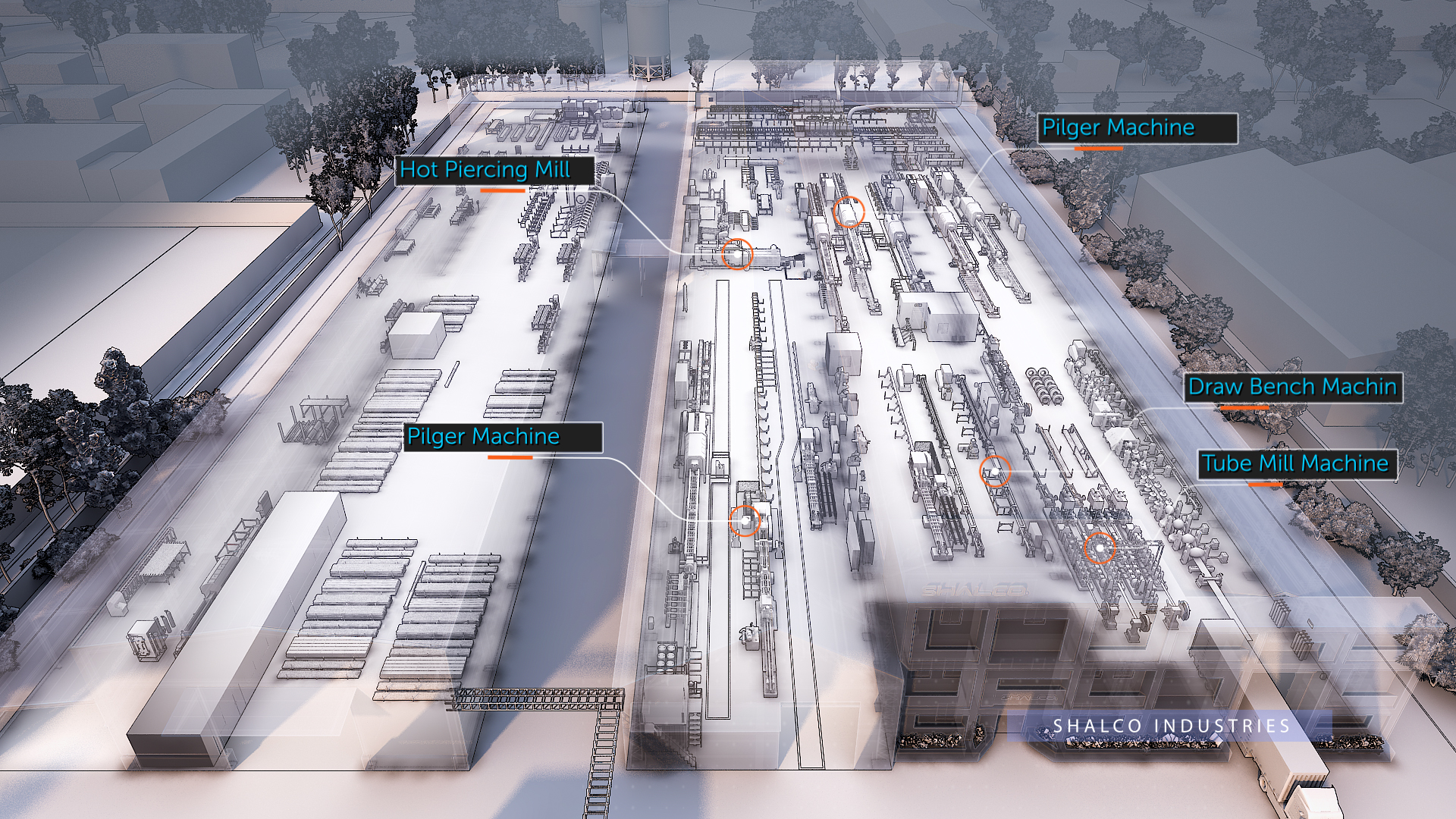
Beyond material supply, Shalco Industries offers comprehensive fabrication services that transform raw stainless steel into finished components ready for power plant installation. The company's modern manufacturing facilities feature advanced equipment for precision machining, forming, welding, and surface treatment.
Precision Machining: CNC machining centers enable production of complex components with tight tolerances required for turbine parts, valve components, and instrumentation fittings. The company's machinists understand stainless steel's unique characteristics—work hardening tendencies, tool wear patterns, and optimal cutting parameters—ensuring efficient production of high-quality parts.
Welding Expertise: Recognizing welding as a critical fabrication process affecting component integrity and longevity, Shalco Industries employs certified welding procedures and qualified welders trained specifically in stainless steel joining. The company utilizes modern welding technologies—TIG (tungsten inert gas), MIG (metal inert gas), and orbital welding systems—appropriate for different applications and material grades.
For power generation components, weld quality directly impacts service life. Heat-affected zones adjacent to welds can be vulnerable to corrosion and cracking if not properly managed. Shalco Industries' controlled welding processes minimize heat input, optimize filler metal selection, and employ post-weld treatments when required to ensure welds equal or exceed base material properties.
Heat Treatment Facilities: Many stainless steel power components require heat treatment—solution annealing to dissolve carbides and optimize corrosion resistance, stress relieving to reduce residual stresses, or precipitation hardening to develop maximum strength. Shalco Industries' heat treatment capabilities, with temperature and atmosphere controls, ensure components receive proper thermal processing for their intended service.
Surface Treatment and Finishing
Component surface condition significantly affects corrosion resistance and fatigue performance. Shalco Industries provides various surface treatments tailored to power generation requirements:
Mechanical Finishing: Grinding, polishing, and blasting operations achieve specified surface roughness and remove surface defects that could serve as corrosion or crack initiation sites. For components in high-purity water systems, particularly in nuclear plants, smooth surfaces minimize particle retention and facilitate decontamination.
Pickling and Passivation: Chemical treatments remove free iron contamination from surfaces and enhance the passive chromium oxide layer that provides stainless steel's corrosion resistance. These treatments are particularly important after fabrication operations that may have contaminated surfaces or disturbed the passive layer.
Electropolishing: This electrochemical process removes a thin surface layer, creating an extremely smooth, passive surface ideal for high-purity applications. Electropolished stainless steel demonstrates superior corrosion resistance and cleanability compared to mechanically finished surfaces.
Custom Solutions for Power Applications
Understanding that power generation presents unique challenges varying by plant type, operating conditions, and specific component requirements, Shalco Industries offers custom engineering and manufacturing solutions. The company works collaboratively with plant engineers and maintenance teams to develop component designs and material specifications optimized for particular applications.
This collaborative approach has resulted in solutions for challenging applications—custom alloy selection for corrosive service, specialized heat treatment procedures for stress-critical components, and innovative fabrication methods for complex geometries. By combining material expertise with manufacturing flexibility, Shalco Industries helps power generators solve problems and improve plant reliability.
Supporting Aging Infrastructure
As global power infrastructure ages, retrofit and replacement component demand increases. Many plants built decades ago used materials and designs that, while adequate initially, have proven vulnerable to specific degradation mechanisms. Shalco Industries supports plant life extension programs by providing replacement components incorporating modern materials and manufacturing methods that offer enhanced durability.
For example, replacing original carbon steel piping with stainless steel in systems experiencing corrosion problems, upgrading to improved stainless steel grades in areas prone to stress corrosion cracking, or fabricating components with enhanced surface treatments to resist fatigue—these improvements, enabled by Shalco Industries' capabilities, extend plant operating life and improve reliability.
Emerging Applications and Future Directions
As power generation technology evolves, new applications for stainless steel continually emerge. Advanced reactor designs—small modular reactors (SMRs), molten salt reactors, and fusion power concepts—will require stainless steels with enhanced radiation resistance, higher temperature capability, or compatibility with novel coolants and working fluids.
Energy storage systems, increasingly important for renewable energy integration, present new stainless steel applications. Thermal energy storage, compressed air energy storage, and various battery technologies all require corrosion-resistant materials for long-term reliability.
Hydrogen, positioned as a critical energy carrier for decarbonization, creates both opportunities and challenges for stainless steel. Hydrogen production via electrolysis, hydrogen storage, and hydrogen combustion all require materials resistant to hydrogen embrittlement while providing corrosion resistance and mechanical properties. Specialized stainless steel grades and manufacturing methods will enable the hydrogen economy's infrastructure.
Conclusion: Material Foundation for Energy Security
Stainless steel's role in modern power generation extends far beyond being merely a construction material—it represents a critical enabling technology for reliable, efficient, and increasingly sustainable electricity production. From the extreme conditions inside nuclear reactors to the corrosive environments of geothermal plants, from the high-temperature components of fossil fuel facilities to the marine atmosphere exposure of offshore wind turbines, stainless steel provides the durability and performance essential for power infrastructure.
The transition to clean energy systems, while changing the mix of generation technologies, will not diminish stainless steel's importance. Rather, renewable energy systems and advanced power technologies create new and diverse applications demanding the unique properties stainless steel provides.
Manufacturing excellence from industry leaders like Shalco Industries transforms stainless steel's material properties into reliable infrastructure. Through comprehensive material expertise, rigorous quality assurance, advanced fabrication capabilities, and collaborative problem-solving, Shalco Industries contributes directly to global energy security and the transition toward sustainable power systems.
As electricity demand continues growing worldwide while environmental imperatives drive technological transformation, the materials comprising power generation infrastructure will face ever-more-demanding requirements. Stainless steel, supported by manufacturing excellence and continuous innovation, will remain fundamental to powering human progress for generations to come.