
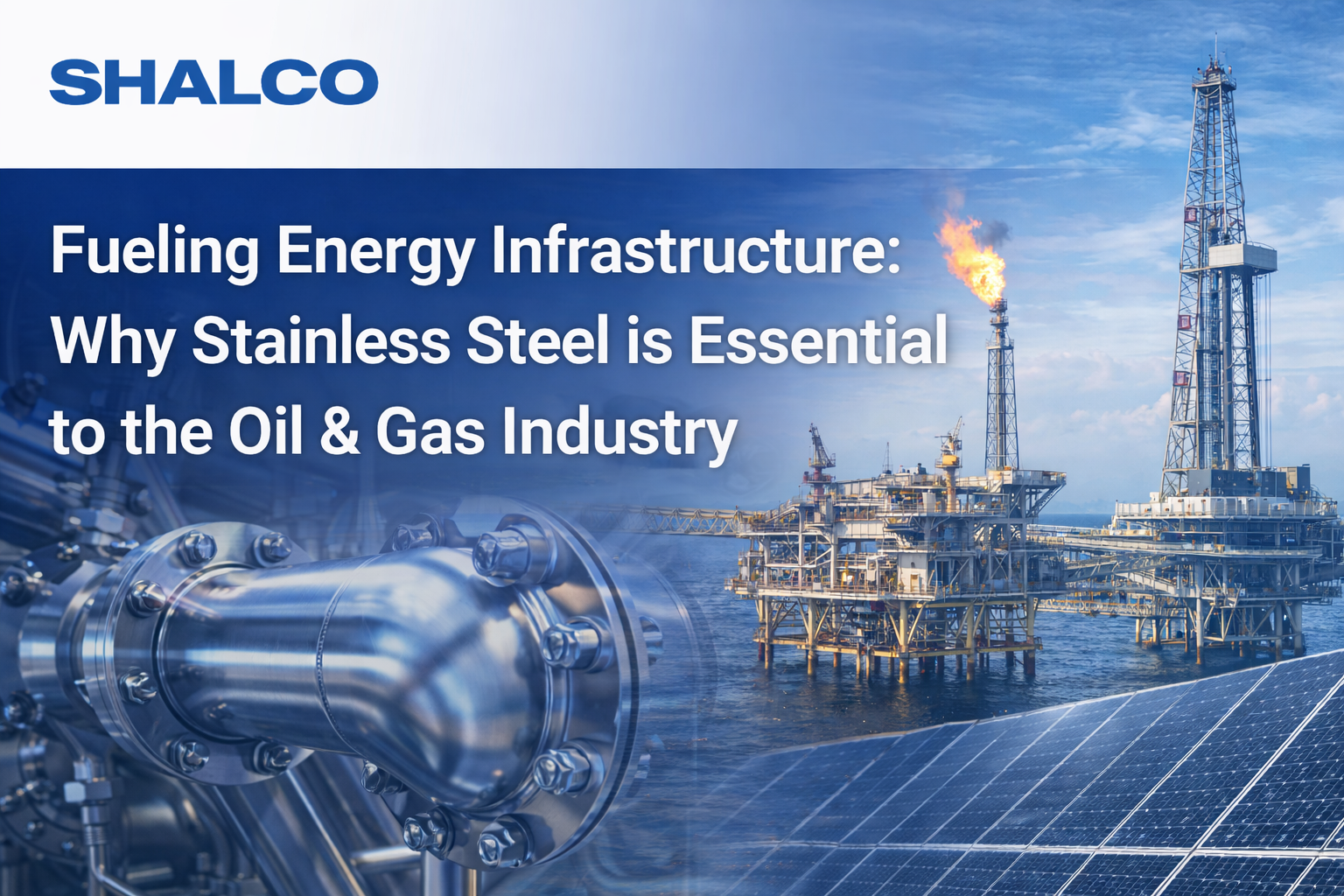
The oil and gas industry operates at the extremes of engineering possibility. From offshore platforms battling corrosive seawater thousands of meters beneath ocean surfaces to refineries processing crude oil laden with sulfur and corrosive compounds, from pipelines traversing arctic tundra to wellheads enduring high-pressure sour gas environments, the industry's infrastructure faces challenges that would destroy ordinary materials within months or even weeks.
Stainless steel has become indispensable to oil and gas operations precisely because it thrives where other materials fail. Its exceptional corrosion resistance, mechanical strength across extreme temperatures, resistance to hydrogen embrittlement, and long-term durability make it the material of choice for critical applications throughout the petroleum value chain—from exploration and production through transportation, processing, and refining. This comprehensive examination explores why stainless steel is essential to oil and gas infrastructure, the specific applications across upstream, midstream, and downstream operations, and how manufacturing excellence from industry leaders like Shalco Industries translates material properties into reliable energy systems.
The Fundamental Challenges of Oil & Gas Environments
Understanding stainless steel's essential role requires appreciation of the hostile environments characterizing oil and gas operations. These environments combine multiple aggressive factors that synergistically attack materials.
Corrosive Media Throughout the Value Chain
Petroleum production and processing expose materials to diverse corrosive substances. Hydrogen sulfide (H₂S), present in "sour" crude oil and natural gas, creates sulfide stress cracking in susceptible materials. Carbon dioxide (CO₂) dissolved in produced water forms carbonic acid that corrodes steel. Chloride ions from formation water or seawater cause pitting and stress corrosion cracking. Organic acids in crude oil attack materials during refining. Elemental sulfur from gas processing creates high-temperature corrosion.
Each of these corrosive agents presents distinct challenges requiring specific material solutions. Stainless steel's chromium-rich passive oxide layer provides exceptional resistance across this spectrum of corrosive environments, making it uniquely versatile for oil and gas applications.
High Pressure and Temperature Extremes
Modern oil and gas operations push pressure and temperature boundaries continuously. Deepwater wells encounter pressures exceeding 140 MPa (20,000 psi) and temperatures approaching 200°C. High-pressure high-temperature (HPHT) wells present even more extreme conditions. Refineries process crude at temperatures reaching 400-500°C under elevated pressures. Liquefied natural gas (LNG) facilities must handle cryogenic temperatures approaching -162°C.
Stainless steels maintain mechanical integrity across these temperature extremes—austenitic grades retain ductility and toughness at cryogenic temperatures while providing useful strength at elevated temperatures. This broad operational window makes stainless steel essential for applications spanning the industry's temperature spectrum.
Hydrogen Embrittlement Concerns
Hydrogen, generated by corrosion reactions or present in process streams, can diffuse into steel and cause embrittlement—loss of ductility and susceptibility to cracking under stress. This phenomenon, particularly severe in high-strength steels exposed to sour environments, has caused catastrophic failures in oil and gas equipment.
Austenitic stainless steels demonstrate excellent resistance to hydrogen embrittlement due to their face-centered cubic crystal structure, which has low hydrogen solubility and diffusivity. This resistance makes austenitic stainless steels preferred materials for sour service applications where hydrogen embrittlement could be catastrophic.
Marine Environment Exposure
Offshore oil and gas operations expose infrastructure to marine atmospheres and seawater immersion—among the most corrosive environments on Earth. Salt spray, splash zones with alternating wet-dry cycles, and submerged conditions all create aggressive attack on metallic materials. Conventional carbon steel requires extensive protective coatings and cathodic protection systems that add cost and require continuous maintenance.
Stainless steel's inherent corrosion resistance in chloride-containing environments makes it the logical choice for offshore platforms, subsea equipment, and marine piping systems where maintenance access is difficult or impossible.
Upstream Applications: Exploration and Production
The upstream sector—finding and extracting hydrocarbons from underground reservoirs—presents some of the industry's most challenging material environments. Stainless steel plays critical roles throughout exploration and production operations.
Wellhead and Christmas Tree Components
Wellheads and Christmas trees (the assembly of valves controlling production at the well surface) contain numerous stainless steel components. Valve bodies, stems, and trim parts utilize martensitic stainless steels like 410 and 420 for their combination of strength and corrosion resistance, or duplex stainless steels for more corrosive environments. Austenitic grades like 316 and super-austenitic alloys find application in wetted components exposed to sour gas or high-chloride produced water.
These components must maintain pressure integrity and operational reliability for decades. Component failure could result in uncontrolled releases with severe safety, environmental, and economic consequences. Stainless steel's reliability under extreme conditions makes it essential for these critical applications.
Downhole Tubulars and Completions
Production tubing, casing, and completion equipment operate in reservoir conditions—high temperatures, high pressures, corrosive fluids, and sometimes high levels of H₂S and CO₂. While carbon steel suffices in benign environments, corrosive wells require corrosion-resistant alloys (CRAs), predominantly various stainless steel grades.
Martensitic stainless steel grades like 13Cr (13% chromium) provide economical solutions for moderately corrosive wells. Duplex and super-duplex stainless steels offer higher strength and enhanced chloride stress corrosion cracking resistance for more aggressive environments. Super-austenitic stainless steels and nickel-based alloys serve the most severe conditions with extreme H₂S, CO₂, and chloride levels.
The selection of appropriate tubular materials directly impacts well economics—inadequate corrosion resistance leads to premature failure requiring expensive workovers, while over-specification increases initial costs unnecessarily. This optimization requires deep understanding of material capabilities and operating conditions.
Subsea Production Systems
Deepwater and ultra-deepwater oil and gas development relies extensively on subsea production systems—wellheads, manifolds, flowlines, and control systems installed on the seafloor. These systems face combined challenges of seawater exposure, high pressures, potentially corrosive produced fluids, and extremely limited maintenance access.
Stainless steels, particularly super-duplex grades like 2507 and super-austenitic grades like 254 SMO, dominate subsea applications. Their exceptional pitting and crevice corrosion resistance in seawater, combined with high strength (particularly for duplex grades), makes them ideal for subsea structural components, piping, and pressure-containing equipment.
Subsea umbilicals—the lifelines supplying hydraulic power, electrical power, and chemical injection to subsea equipment—utilize stainless steel tubing for hydraulic and chemical lines. The material's corrosion resistance ensures decades of reliable service in the harsh subsea environment.
Enhanced Oil Recovery Systems
As conventional reservoirs deplete, enhanced oil recovery (EOR) techniques—water flooding, chemical injection, thermal recovery, and CO₂ injection—extend production. These techniques often create more corrosive conditions than primary production.
Water injection systems handle large volumes of seawater or produced water, often containing high chloride and dissolved oxygen. Stainless steel piping, valves, and pump components resist the corrosion and erosion-corrosion that would rapidly destroy carbon steel. Chemical injection systems utilize stainless steel for compatibility with various chemicals—corrosion inhibitors, scale inhibitors, biocides, and demulsifiers—that may be incompatible with other materials.
Midstream Applications: Transportation and Storage
The midstream sector moves hydrocarbons from production sites to processing facilities and markets. While carbon steel dominates long-distance transmission pipelines, stainless steel serves critical roles where corrosion resistance is essential.
Gathering Systems and Flow Lines
Gathering systems collect production from multiple wells and transport it to processing facilities. These systems handle multiphase flow—oil, gas, and produced water—often containing corrosive components. Flowlines in offshore fields and corrosive onshore environments utilize stainless steel, particularly duplex grades combining corrosion resistance with high strength that reduces wall thickness and installation costs.
Internal corrosion in gathering systems can lead to leaks with safety, environmental, and economic consequences. Stainless steel flowlines eliminate or dramatically reduce internal corrosion, extending service life and improving reliability compared to carbon steel with corrosion allowances or internal coatings that may degrade over time.
Gas Processing Facilities
Natural gas requires processing to remove water, H₂S, CO₂, and other impurities before entering transmission pipelines. Gas processing creates highly corrosive environments—amine solutions used for acid gas removal, glycol dehydration systems, and sulfur recovery units all require corrosion-resistant materials.
Amine treatment units utilize stainless steel extensively in contactors, piping, and heat exchangers exposed to amine solutions. The material resists the corrosive attack that carbon steel experiences in these systems. Sulfur recovery units, which convert H₂S to elemental sulfur, operate at elevated temperatures with sulfur vapor—conditions where stainless steel's sulfidation resistance proves essential.
LNG Facilities
Liquefied natural gas production and regasification facilities represent some of the most demanding applications for stainless steel. LNG's cryogenic temperature (-162°C) eliminates most structural materials, but austenitic stainless steels—particularly 304L and 316L—retain excellent toughness and ductility at these temperatures.
LNG storage tanks, process piping, heat exchangers, and vaporizers all utilize stainless steel for its cryogenic properties. The material's thermal contraction characteristics, weldability at cryogenic service temperatures, and decades of proven performance make it the standard material for LNG applications globally.
Storage Tank Components
While large storage tanks typically use carbon steel for shells, internal components often require stainless steel. Floating roof seals, internal piping, heating coils, and instrumentation exposed to stored products benefit from stainless steel's corrosion resistance. This prevents contamination of products and extends component service life in environments where maintenance access is difficult.
Downstream Applications: Refining and Petrochemicals
Refineries and petrochemical plants transform crude oil into fuels, lubricants, and chemical feedstocks through complex processes involving extreme temperatures, pressures, and corrosive environments. Stainless steel is ubiquitous throughout these facilities.
High-Temperature Process Equipment
Crude distillation, catalytic cracking, reforming, and other refining processes operate at temperatures where carbon steel rapidly loses strength and experiences accelerated corrosion. Furnace tubes, reactor internals, and fractionation column trays utilize stainless steels—austenitic grades like 304H and 316H for moderate temperatures, and specialized high-temperature grades for more extreme conditions.
The material's oxidation resistance, creep strength, and resistance to sulfidation and carburization enable efficient high-temperature processes. Component longevity in these applications directly impacts refinery economics—premature failures cause expensive unplanned shutdowns and lost production.
Corrosive Service Applications
Many refinery streams are highly corrosive. Crude oils contain sulfur compounds, naphthenic acids, and chlorides that attack materials during processing. Catalytic reformer units produce streams containing chlorides and sulfur. Hydrotreating and hydrocracking units operate under high hydrogen pressures that can cause hydrogen attack in carbon steel.
Stainless steels provide solutions across these corrosive applications. Austenitic grades resist naphthenic acid corrosion in crude units. Duplex stainless steels handle chloride-containing streams in reformers and hydrotreaters. The material's hydrogen embrittlement resistance makes it suitable for high-pressure hydrogen service where carbon steel would fail.
Heat Exchanger Applications
Refineries contain thousands of heat exchangers recovering thermal energy between process streams. Heat exchanger tubes represent a critical application for stainless steel—the material's corrosion resistance on both tube and shell sides, combined with good thermal conductivity and mechanical properties, makes it ideal for many services.
Shell-and-tube exchangers handling corrosive streams on either side utilize stainless steel tubing that resists corrosion while providing decades of reliable service. The material's resistance to stress corrosion cracking, particularly important in heat exchangers where tube-side and shell-side temperature differences create thermal stresses, prevents premature failures.
The Essential Contribution of Shalco Industries
The oil and gas industry's reliance on stainless steel only delivers value through manufacturing excellence that translates material properties into reliable components. Shalco Industries has established itself as a critical supplier to the oil and gas sector, providing materials and fabricated components that meet the industry's demanding requirements.
Comprehensive Material Portfolio
Shalco Industries maintains an extensive inventory of stainless steel grades serving oil and gas applications—from commodity austenitic grades like 304 and 316 to specialized duplex and super-duplex alloys, from martensitic grades for valve applications to super-austenitic alloys for the most corrosive environments.
This comprehensive material portfolio enables Shalco Industries to serve as a single-source supplier for diverse project requirements. Whether supplying tubing for subsea umbilicals, plate for pressure vessels, or bar stock for forged components, the company's material breadth simplifies procurement and ensures material compatibility across projects.
Oil & Gas Industry Expertise
Beyond material supply, Shalco Industries brings deep understanding of oil and gas applications and requirements. The company's technical team understands material selection considerations specific to the industry—NACE (National Association of Corrosion Engineers) requirements for sour service, material specifications for subsea applications, high-temperature design considerations, and cryogenic material requirements.
This expertise helps engineers and procurement specialists navigate complex material selection decisions. Shalco Industries can recommend optimal materials balancing performance requirements, availability, and cost—critical guidance for projects where material decisions significantly impact economics and reliability.
Quality Assurance and Compliance
Oil and gas applications demand rigorous quality assurance and comprehensive documentation. Shalco Industries maintains quality management systems aligned with international oil and gas industry standards including API (American Petroleum Institute) specifications, ASME codes, and NACE standards.
Every material lot receives thorough testing—chemical composition verification, mechanical property testing, non-destructive examination, and corrosion testing as required by applicable specifications. Material test reports (MTRs) provide complete traceability from steel mill through delivery, documenting compliance with specifications and giving purchasers confidence in material quality.
For critical applications like pressure vessels and piping systems, this documentation is essential for regulatory compliance and liability management. Shalco Industries' commitment to comprehensive quality documentation supports clients' quality assurance programs and project requirements.
Advanced Fabrication Capabilities
Beyond raw material supply, Shalco Industries offers extensive fabrication services transforming stainless steel into finished components ready for installation in oil and gas facilities.
Precision Machining: Modern CNC machining centers enable production of complex valve components, instrumentation fittings, flanges, and custom parts meeting tight dimensional tolerances. The company's machinists understand stainless steel's machining characteristics—work hardening, tool selection, and optimal cutting parameters—ensuring efficient production of high-quality components.
Welding Excellence: Welding represents the most critical fabrication process affecting component integrity in oil and gas service. Shalco Industries employs certified welding procedures qualified to ASME Section IX and other industry codes, executed by welders trained specifically in stainless steel joining techniques.
The company utilizes appropriate welding processes for different applications—TIG welding for high-quality root passes and thin-wall tubing, MIG welding for productivity on heavier sections, and specialized processes like orbital welding for tube-to-tubesheet joints in heat exchangers. Proper filler metal selection, shielding gas optimization, and heat input control ensure welds meeting or exceeding base material properties while minimizing susceptibility to corrosion.
Pressure Vessel and Piping Fabrication: Shalco Industries fabricates complete pressure vessels, columns, and piping systems for oil and gas applications. The company's facilities accommodate large components, with capabilities for forming, rolling, welding, heat treatment, and testing of pressure-containing equipment.
Fabrication to ASME Section VIII (pressure vessels) and B31.3 (process piping) codes ensures components meet safety requirements for oil and gas service. Non-destructive examination—radiography, ultrasonic testing, liquid penetrant inspection—verifies weld quality and material integrity throughout fabrication.
Heat Treatment and Surface Treatment
Many oil and gas components require specific heat treatments or surface treatments for optimal performance. Shalco Industries provides:
Solution Annealing: Restores corrosion resistance in austenitic stainless steels after welding or forming by dissolving chromium carbides and achieving homogeneous microstructure.
Stress Relieving: Reduces residual stresses in fabricated components that could contribute to stress corrosion cracking or distortion during service.
Pickling and Passivation: Removes weld discoloration, free iron contamination, and enhances the passive chromium oxide layer that provides stainless steel's corrosion resistance—critical for components in corrosive oil and gas service.
Surface Finishing: Various mechanical finishing operations achieve specified surface roughness for applications requiring smooth surfaces to minimize fouling, facilitate cleaning, or meet hygienic requirements in specialty chemical processing.
Custom Engineering Solutions
Oil and gas projects often present unique challenges requiring custom material solutions. Shalco Industries works collaboratively with project engineers to develop component designs and material specifications optimized for specific applications.
This collaborative approach has resulted in innovative solutions—specialized alloy selection for unusual corrosive conditions, custom heat treatment procedures for stress-critical components, and novel fabrication methods for complex geometries. By combining material expertise with manufacturing flexibility, Shalco Industries helps oil and gas operators solve difficult problems and improve facility reliability.
Supporting Maintenance and Turnaround Activities
Beyond new construction, oil and gas facilities require ongoing maintenance and periodic turnarounds for inspection and component replacement. Shalco Industries supports these activities through rapid supply of replacement parts, emergency machining services, and expedited fabrication when unplanned failures occur.
The company's inventory management and production capabilities enable quick response to urgent requirements—critical when facility downtime costs hundreds of thousands daily. This responsive service helps operators minimize downtime and return facilities to production quickly.
Emerging Trends and Future Applications
The oil and gas industry continues evolving, creating new applications and requirements for stainless steel. Several trends are shaping future demand:
Deeper Water Development: Ultra-deepwater projects beyond 3,000 meters depth require materials withstanding extreme pressures and limited maintenance access. Advanced stainless steel grades and manufacturing methods will enable these frontier developments.
HPHT Reservoirs: High-pressure high-temperature reservoirs, previously considered uneconomical, are increasingly targets as conventional reservoirs deplete. These wells require materials performing at pressures exceeding 140 MPa and temperatures approaching 200°C—conditions pushing current material capabilities.
Corrosion Management: As fields mature and production moves toward tail-end recovery with increased water production, corrosion challenges intensify. Increased use of corrosion-resistant alloys, including stainless steels, addresses these challenges more economically than corrosion allowances and intensive monitoring.
Environmental Requirements: Stricter environmental regulations drive adoption of materials and designs minimizing leak risks. Stainless steel's reliability and longevity support operators' environmental stewardship objectives.
Energy Transition: While oil and gas demand may eventually decline, the industry will remain significant for decades. Moreover, many energy transition technologies—hydrogen production and storage, carbon capture systems, biofuel processing—require corrosion-resistant materials where stainless steel expertise translates directly.
Conclusion: The Indispensable Material for Energy Infrastructure
Stainless steel's role in oil and gas extends far beyond being a premium material option—it represents an essential enabling technology for safely, reliably, and economically producing the petroleum products modern civilization requires. From the extreme environments of deepwater production to the complex chemistry of refining, stainless steel provides the corrosion resistance, mechanical properties, and long-term durability that conventional materials cannot match.
As the industry pushes into more challenging environments and operates aging infrastructure for extended periods, stainless steel's importance will only increase. The material's versatility across diverse applications, proven performance over decades, and continuous development of enhanced grades ensure its continued centrality to oil and gas operations.
Manufacturing excellence from industry leaders like Shalco Industries transforms stainless steel's material properties into the reliable infrastructure upon which global energy security depends. Through comprehensive material expertise, rigorous quality assurance, advanced fabrication capabilities, and responsive customer service, Shalco Industries contributes directly to the oil and gas industry's ability to meet world energy demands safely and efficiently.
The partnership between advanced materials like stainless steel and manufacturing excellence like that provided by Shalco Industries will continue fueling energy infrastructure for generations to come.

